Have you ever noticed how sensitive young children are to changes in routine? Even a slight schedule adjustment can feel huge to a toddler or primary student. On the positive side, young children have an incredible ability to internalize the daily rhythm of their environment. They intuitively know what comes next, finding deep comfort in predictability.
It is equally amazing how effortlessly young children absorb language, progress from sitting to walking to running, or focus intently on tiny details in nature.
During these stages of early childhood, children are driven by a powerful biological impetus. Think of a toddler who wants to climb up and down a set of stairs repeatedly. We can try to redirect them, but they remain undeterred. Despite the immense physical effort involved, the work seems completely natural and joyful to them.
In Montessori, we pay close attention to these windows of developmental focus. We call them Sensitive Periods.
What is a Sensitive Period?
To explain sensitive periods, Dr. Maria Montessori used the analogy of newly hatched caterpillars. These tiny caterpillars hatch in shaded nooks but are biologically drawn toward bright light at the tips of branches, where the softest, youngest leaves grow. They do not know that light leads to food; they are simply responding to a developmental drive. Once they have fed and grown, that attraction to light fades, and they move into their next stage of growth.
Like the caterpillar, a young child in a sensitive period becomes intensely absorbed in acquiring a specific skill or concept. Neurologically, specific groups of neurons become highly active, rapidly building foundational neural networks in the developing brain. These windows of opportunity are transitory, marked by passionate, self-directed focus.
In our Toddler (15–36 months) and Primary (ages 3–6) environments at Acorn Montessori School, we focus on four primary sensitive periods:
- Order
- Language
- Refinement of the Senses
- Movement
1. The Sensitive Period for Order (Birth to Age 6)
Peak interest in order occurs between birth and age three, continuing through age six. Children in this stage have a profound need for consistency in their environment and routines.
For adults, organization is a convenience that makes our days run smoothly. For a young child, physical order is the foundation for their understanding of the world. When their surroundings or schedules change constantly, children must expend energy continuously adapting, which takes energy away from other developmental tasks.
When children experience predictable, ordered spaces—like our classrooms, where every material has a designated place on a low shelf—they feel secure, build trust in their environment, and develop strong internal self-regulation.
2. The Sensitive Period for Language (Birth to Age 6)
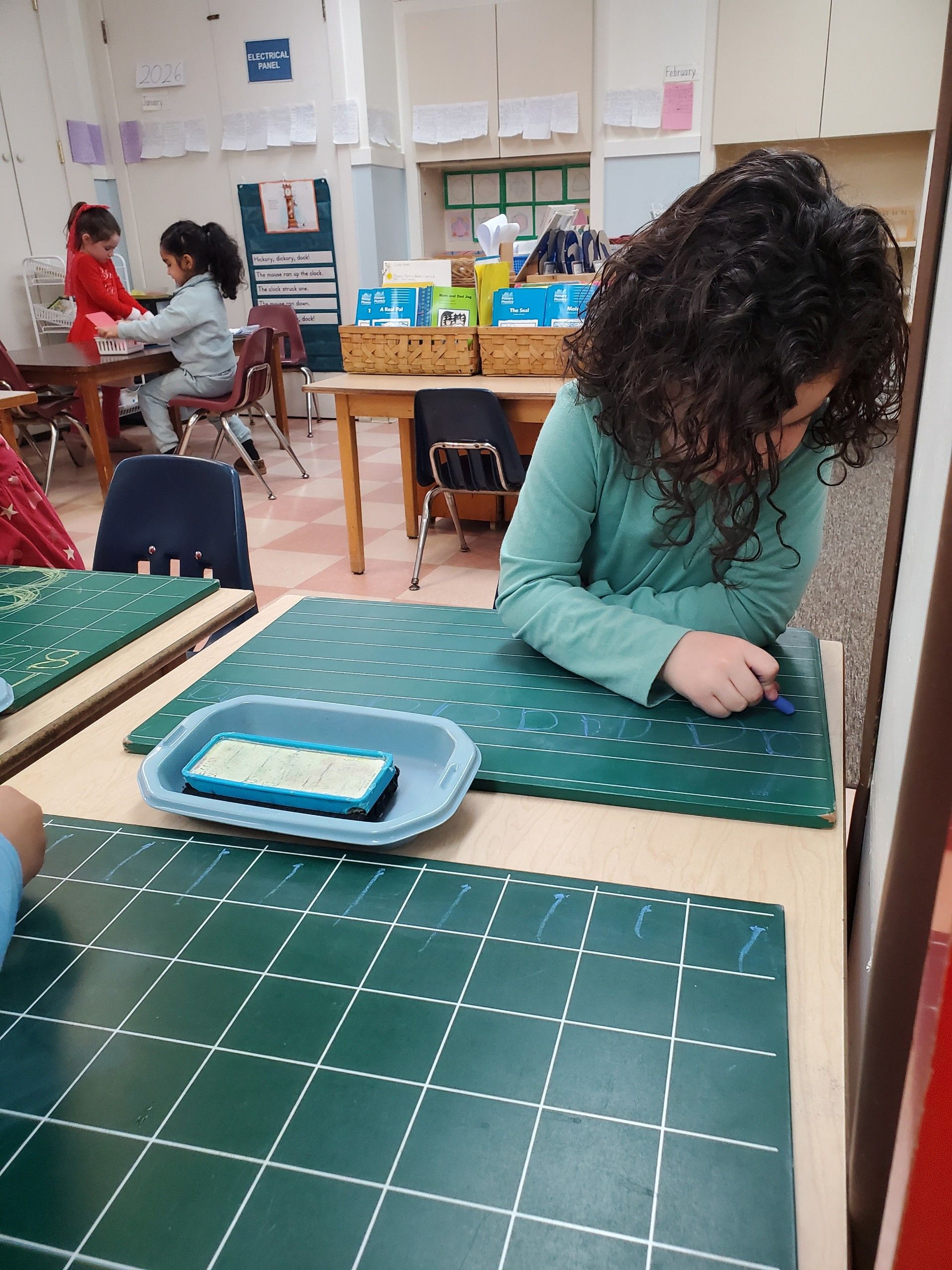
Children absorb spoken language effortlessly from birth. The first three years are dedicated to acquiring spoken words, while ages three to six focus on expanding vocabulary, grammar, reading, and writing.
During this period, children hear the cadence of speech, internalize grammatical structures, and begin imitating complex sounds. Because their minds absorb everything in their environment, we surround our students with rich, precise vocabulary. Our guides name real objects, read stories, and engage in meaningful, multi-turn conversations with children from their very first day.
3. The Sensitive Period for Refinement of the Senses (Birth to Age 4.5)
Young children learn about the world through hands-on sensory exploration. This window helps children perceive increasingly fine distinctions in their surroundings.
When children work with sensorially rich Montessori materials—such as comparing precise weights, textures, colors, or pitch—they refine their powers of observation and organize their mental impressions. Neurologically, this builds durable networks for visual, auditory, and tactile discrimination that support future mathematical and scientific thinking.
4. The Sensitive Period for Movement (Birth to Age 4)
Movement is how children interact with their environment, express their personality, and build independence. Between ages two and a half and four, children concentrate on coordinating and refining their physical movements.
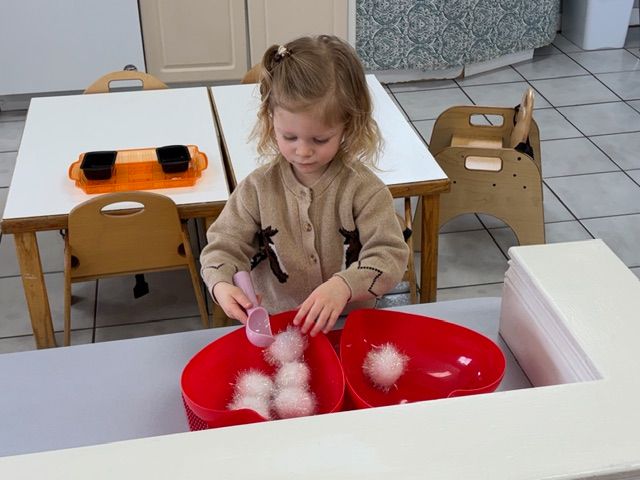
Children in this stage thrive when their movement is tied to a real, purposeful task. For example, while a play kitchen might hold interest briefly, young children derive far greater satisfaction from real practical life tasks—such as slicing banana slices, pouring water, or wiping a table. Purposeful activity helps children refine fine motor control, adapt to their culture, and contribute meaningfully to their classroom community.
The Power and Potential of Developmental Windows
The term sensitive period is a reminder to adults to tread mindfully and with care. During these optimal windows, children acquire complex skills—such as language, physical coordination, and order—spontaneously and joyfully.
Once a sensitive period passes, a child can still learn the skill, but doing so requires conscious effort, repetition, and instruction. Think of how effortless it is for a young child to learn a native language compared to the work required for an adult to learn a second language!
When a child’s natural developmental needs are met in a carefully prepared environment, they experience deep concentration, inner satisfaction, and joy.
Experience Our Classrooms in Action
Curious to see how our prepared environments support your child’s natural developmental stages? Schedule a tour today!