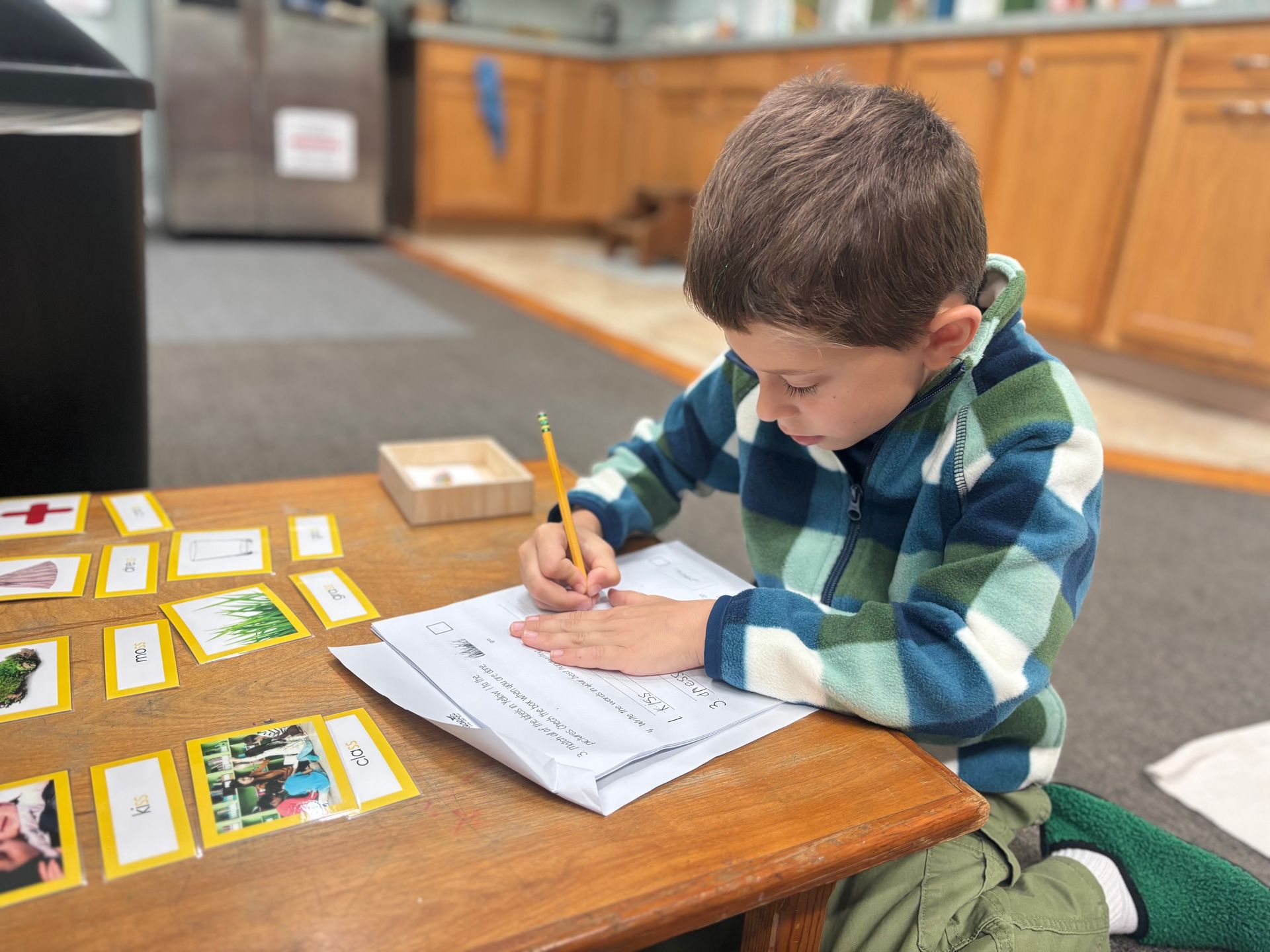
If you ask five different people to define Montessori, you will likely get five different answers.
- Are you new to Montessori? You might feel overwhelmed by the sheer depth of the answers you receive.
- Has your child been enrolled at Acorn for years? You may still find yourself struggling to summarize this rich educational experience during a brief chat at soccer practice or a weekend birthday party.
You are not alone. It is challenging to condense an entire philosophy of living and learning into a five-minute conversation.
While there is no single sentence that captures it all, we can look at the five core principles that define Montessori education—and shape daily life here on our campus.
1. It honors human development and meets children where they are.
Human development is the heart of everything we do. Dr. Maria Montessori spent years observing children, noticing clear growth patterns across the first 24 years of life—what she termed the Planes of Development.
While every child develops at their own unique pace, these developmental patterns are universal. By understanding these stages, Montessori created an educational approach that intentionally supports a child's natural growth. From our multi-age classrooms to the physical design of our spaces and hands-on materials, everything at Acorn is curated to meet children where they are today.
2. Guides lead the path; they don't lecture from a blackboard.
You will never see an Acorn Guide standing at the front of a classroom lecturing rows of quiet desks. In fact, traditional lecturing doesn't exist here.
Instead, our guides serve as facilitators. We follow a rich, comprehensive curriculum, but the magic lies in how it is delivered:
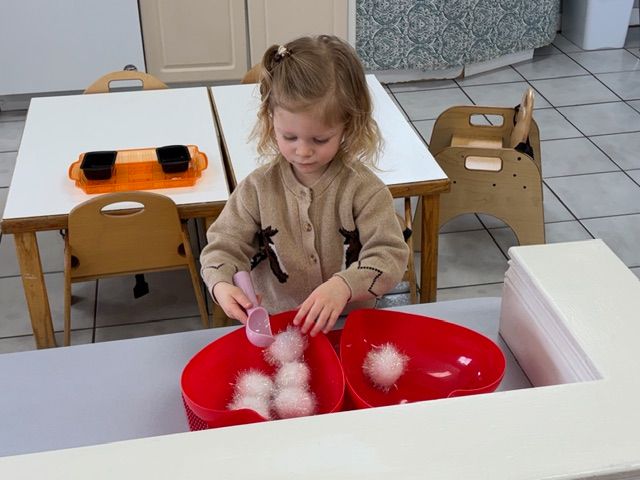
- Toddler & Primary (Ages 1.5–6): Children receive mostly individual, hands-on lessons. They progress through materials at their own pace without the pressure of keeping up with—or waiting for—their peers.
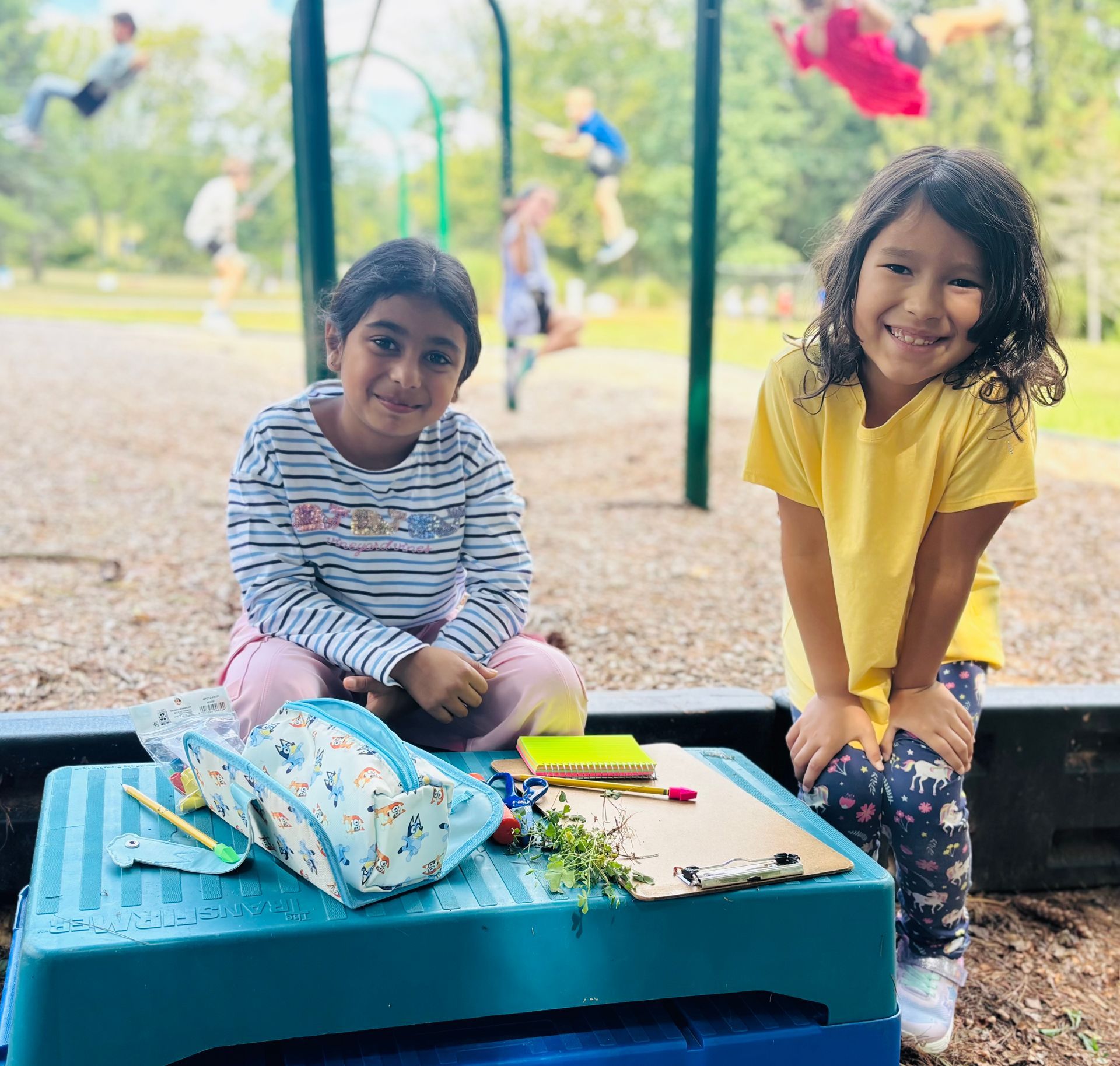
- Elementary (Ages 6–12): As children grow, their need for peer connection deepens. Group lessons become more frequent, fostering collaborative problem-solving while still allowing individual interest and mastery to drive their work.
Education should never be one-size-fits-all. We value skill mastery, but we respect that learning cannot be forced onto a standardized timeline.
3. Independence builds confidence and genuine excellence.
When children are trusted to do meaningful work, their self-belief flourishes. We see this every single day across our campus:
- Toddlers learn to dress themselves, care for their environment, and actively participate in daily routines.
- Primary children select their own work, prepare their own daily snacks, and take pride in maintaining their classroom community.
- Elementary students manage multi-step research projects, collaborate on community endeavors, and take responsibility for their learning journey.
When children are trusted with age-appropriate independence, they learn that they are capable. That confidence builds naturally, shaping adults who aren't afraid to solve problems or try new things.
4. Social learning is just as important as academics.
"Educating the whole child" is a phrase used often in education, but conventional systems rarely offer the time or structure to truly practice it.
At Acorn, our daily flow features uninterrupted, flexible work blocks. This design allows for deep concentration—whether a child is spending an hour mastering advanced math materials or working through a friendship conflict with a guide. Social-emotional learning isn't a isolated 20-minute lesson; it is woven into the fabric of every morning and afternoon. Conflicts are not disruptions to learning—they are the learning opportunities.
5. It prepares children for the universe—and their place in it.
The Montessori curriculum is designed to cultivate compassionate, curious, and active community members. Our goal is not simply to prepare children for the next grade level, but to prepare them for life.
Through Montessori's "Cosmic Education," students explore the story of the universe, the history of human culture, and the interconnectedness of all living things. By understanding the natural world and the contributions of those who came before them, children develop a deep sense of gratitude, stewardship, and purpose.
Dr. Maria Montessori captured this sentiment in a single thought:
"The child is both a hope and a promise for mankind."
At Acorn Montessori School, we carry that hope and promise into our classrooms every day—supporting each child as they grow into the confident, capable person they are meant to be.
Interested in seeing Montessori in action?
Schedule a tour
to visit our campus and observe our classrooms firsthand.