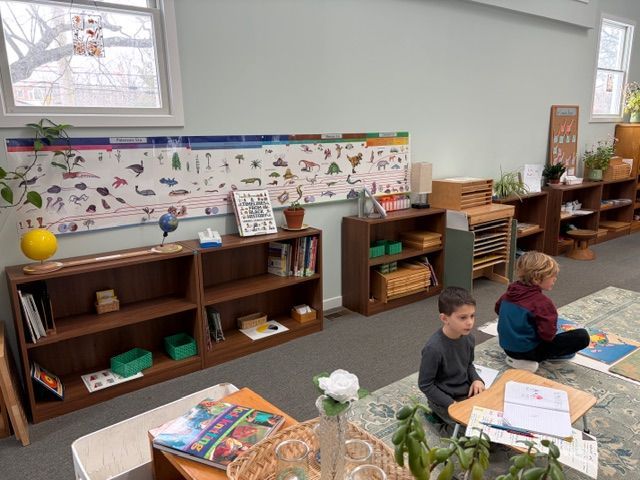
If you have spent time in a Montessori environment, you may have noticed something missing: standard letter grades, gold stars, and rankings that pit children against each other.
In a traditional classroom, children are often trained to look outward for validation—asking "What grade did I get?" or "Did I win?" In a Montessori setting, we cultivate a foundation built on competition with oneself rather than with others.
However, opting out of peer-to-peer competition in the classroom does not leave children unprepared for "the real world." Instead, it equips them with the exact internal tools they need to thrive, collaborate, and lead in competitive environments throughout life.
Internal vs. External Motivation
Driven by intrinsic motivation—a core value of our educational model for over a century—children learn because they are curious, not because they are chasing a reward. Modern research continually supports what Dr. Maria Montessori observed: people are most successful and fulfilled when driven by internal desire rather than external prizes like grades, money, or trophies.
By removing external pressure, we create a safe space for deep learning, risk-taking, and genuine self-improvement.
5 Character Traits for Lifelong Achievement
How does a cooperative environment build resilient, high-achieving adults? Through five key character traits nurtured daily at Acorn:
- Self-Confidence: True confidence comes from accomplishment. When a toddler sweeps up her own crumbs, a four-year-old makes his own sandwich, or an eight-year-old solves a complex long-division problem, they experience authentic self-fulfillment. Repeat this hundreds of times, and a child develops an unshakeable "I can do it" attitude.
- Resilience: When driven by internal motivation rather than a grade, failure isn't a negative outcome—it is simply a step toward mastery. Our students learn to see mistakes as early, welcome motivators that guide them forward.
- Independence: Children learn to take initiative without waiting for adult direction. This independence allows them to confront challenges head-on, tune out distractions, and step naturally into leadership roles.
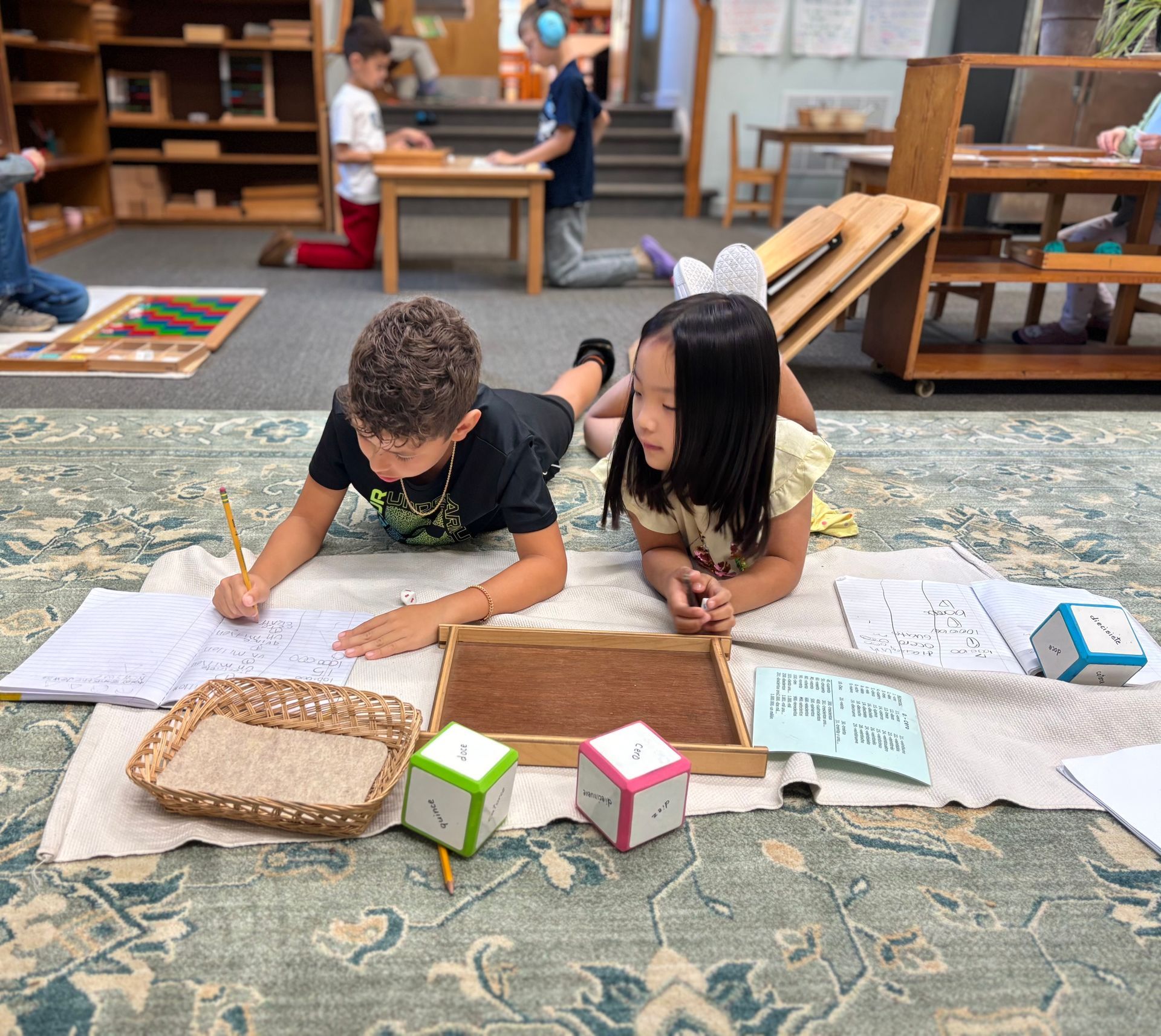
- Cooperation: Real-world success often depends on teamwork. In our Elementary classrooms (ages 6–12), where social connection is a natural developmental drive, children work in small, collaborative groups. They practice negotiation, flexibility, and shared goal-setting daily.
- Self-Advocacy: Through daily class meetings, conflict-resolution practice, and regular opportunities to present their work to peers starting as early as age six, Montessori students learn to speak up for themselves and convey their ideas with clarity and poise.
When children learn to measure success by their own growth rather than someone else’s progress, they don't just adapt to the real world—they lead it.
Did You Know?
Many accomplished figures attribute their success to early Montessori education. NBA MVP Stephen Curry shared how his Montessori foundation gave him the confidence, focus, and drive necessary to achieve at the highest level. Watch Stephen Curry speak about his Montessori experience.