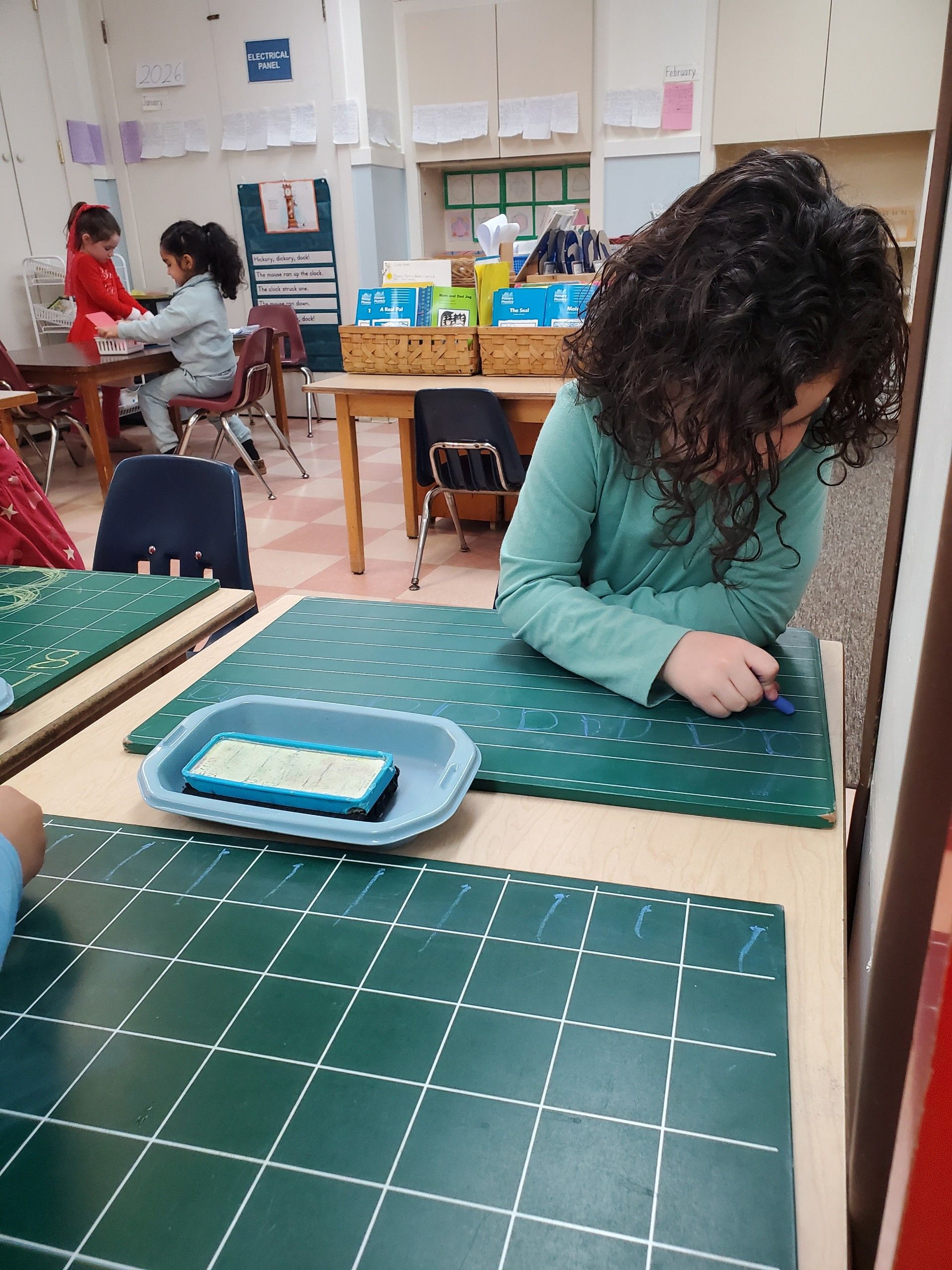
It is no longer a secret: formal handwriting instruction is disappearing in many traditional schools across the country.
As conventional classrooms shift more time and resources toward keyboarding and digital standardized skills, handwriting—particularly cursive—has taken a backseat. The result is a generation of children who often miss out on the cognitive, spatial, and fine motor benefits of learning to write by hand.
At Acorn Montessori School, we have a different perspective. As a time-tested educational approach, Montessori has never set handwriting aside. Instead, guiding children to write with confidence, clarity, and ease remains a natural, joyful part of our everyday curriculum.
Here is how our prepared environments guide children in the art of writing, from early toddlerhood through the elementary years.
1. Indirect Preparation: Building Hand Strength Early
Long before a child ever holds a pencil, their hands are secretly preparing for the task.
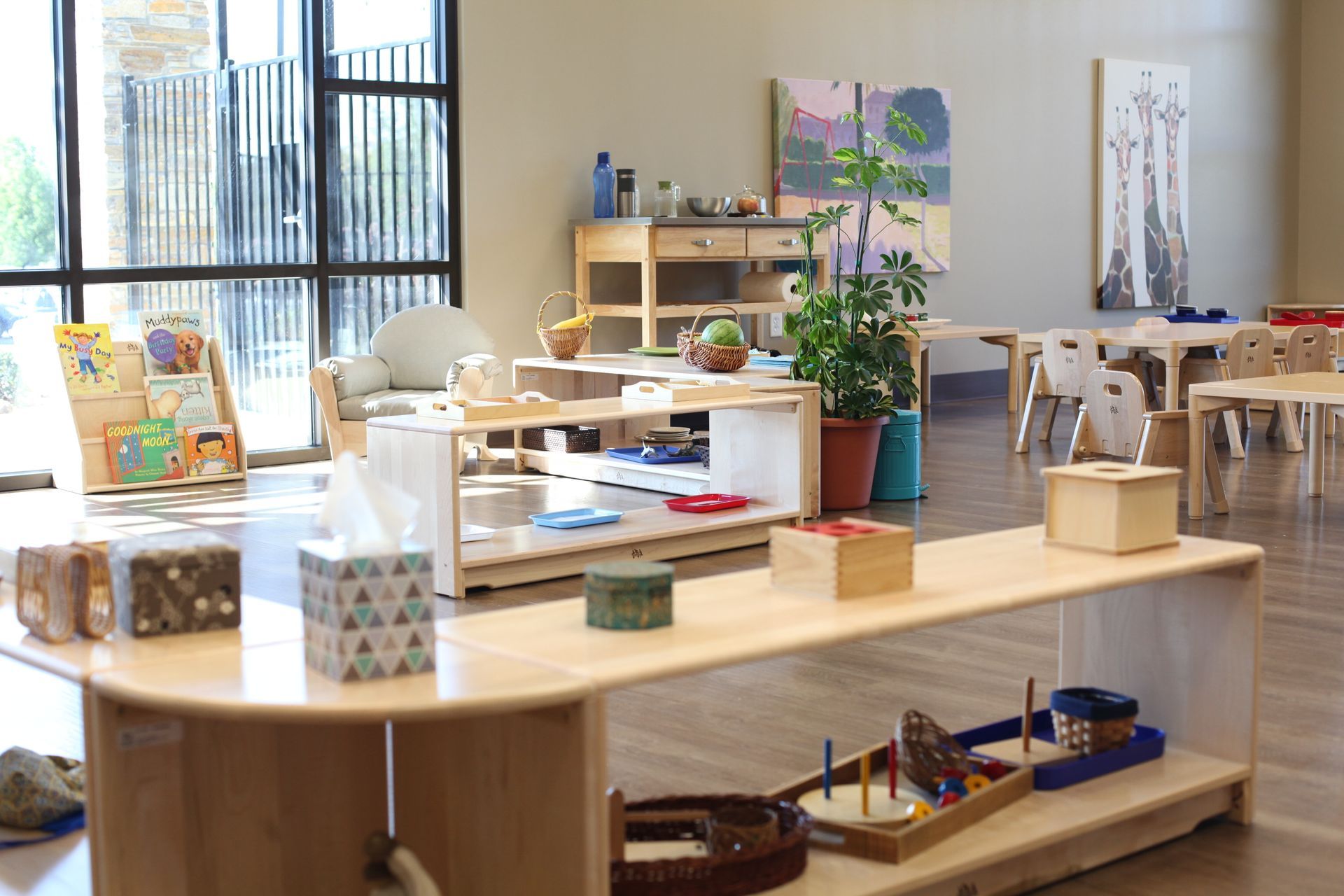
Walk into an Acorn Toddler or Primary classroom, and you will see young children engaged in work that refines fine motor coordination and hand strength:
- The Pincer Grip: Every time a three-year-old lifts a knobbed cylinder, they are naturally strengthening the exact three-finger grip needed to hold a writing instrument.
- Left-to-Right Orientation: Montessori materials are intentionally arranged on shelves from left to right, subtly training the eye and hand for the directionality of reading and writing.
Through fun, sensorial exploration, children build muscle memory and stamina effortlessly.
2. Learning to Manipulate a Pencil
Before writing full words or sentences, children learn pencil control using specialized tools.
A core material in our Primary classrooms is the Metal Insets. While these metallic geometric shapes look like a math lesson, their primary purpose is handwriting preparation. By tracing shapes and filling them in with colored pencils using precise strokes, children practice:
- Maintaining proper pencil grip.
- Applying consistent, controlled pressure.
- Controlling movements from left to right across the page.
3. Tactile Letter Formation
When it comes time to learn actual letter shapes, Montessori relies on sensory integration rather than rote paper-and-pencil drills.
- Sandpaper Letters: These wooden tiles feature textured letters made of fine sand. Children trace the shape with two fingers while hearing the corresponding sound, connecting muscle memory directly with phonics.
- Sand Trays: Children also practice drawing letter shapes in smooth trays of sand, offering a low-pressure, tactile way to self-correct and experiment.
4. Why We Prioritize Cursive
By ages four or five, most Montessori students begin writing spontaneously and joyfully because their hands are thoroughly prepared.
In Montessori primary environments, children are typically introduced to cursive first. While this often surprises parents familiar with conventional manuscript print, cursive offers several distinct developmental advantages:
- Fewer Letter Reversals: Because cursive letters start from a consistent baseline, common visual confusions (like mixing up 'b' and 'd') are significantly reduced.
- Natural Flow of Thought: Connected strokes allow the hand to glide continuously across paper, helping children focus on expressing ideas rather than stopping and starting between individual letters.
- Enhanced Reading Skills: Learning connected letters helps early readers recognize common word patterns and letter groupings (such as th, sh, or ing) more fluidly.
5. Continuing the Journey in Elementary
When students transition into our Elementary program, handwriting becomes a functional, everyday tool for self-expression and research.
Teachers help students refine their handwriting skills, bridging any gaps as their written output increases. Students keep journals, record scientific observations, and write research projects by hand. Because they were given a solid foundation early on, our students take genuine pride in the presentation and care of their written work.
While our elementary students do learn modern computer and keyboarding skills, they remain anchored by the ability to express themselves on paper. In a fast-paced world, we love knowing that Acorn students will always enjoy the simple power of sitting down with paper and pen to craft a thoughtful letter or note.
Discover Learning in Action
Curious about how hands-on learning works in our classrooms? We'd love to invite you in for a tour of our campus.