When you step into a classroom at Acorn Montessori School, one of the first things you’ll notice is the warmth and beauty of the environment. As you scan the shelves of our prepared environments—from the Toddler room to the Elementary community—you’ll see vibrant, colorful materials that stand out against the neutral, natural tones of our furniture and flooring.
These materials are intentionally designed for beauty to draw the child in. However, at Acorn, beauty always serves a purpose. The distinct colors of Montessori materials aren't just for aesthetics; they are a sophisticated system of organization and a powerful tool for cognitive development.
Creating External and Internal Order
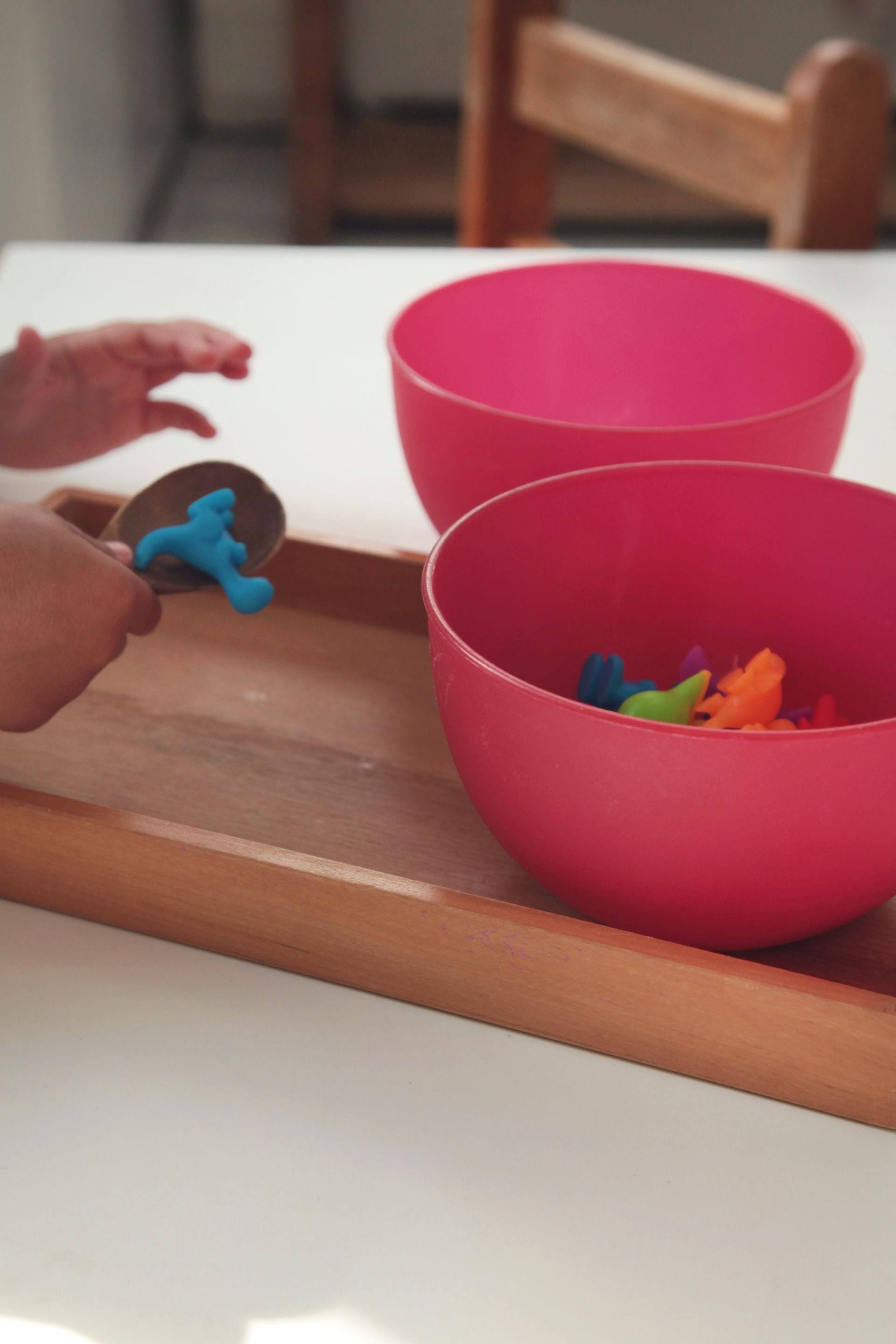
In our Toddler and Primary classrooms, Practical Life activities—such as watering a plant, scrubbing a table, or arranging flowers—are arranged by color. If a child is working with a window-cleaning activity, every object needed for that task (the spray bottle, the squeegee, and the cloth) might be coded in the same shade of blue.
This allows even our youngest learners to rely on color cues to know which objects belong together. It fosters independence, allowing a child to successfully return a dry apron to the correct station or gather supplies without needing to ask an adult for help.
Integrated Throughout the Curriculum
As children progress, the color-coding becomes a vital roadmap for academic subjects like Geography, Mathematics, and Language.
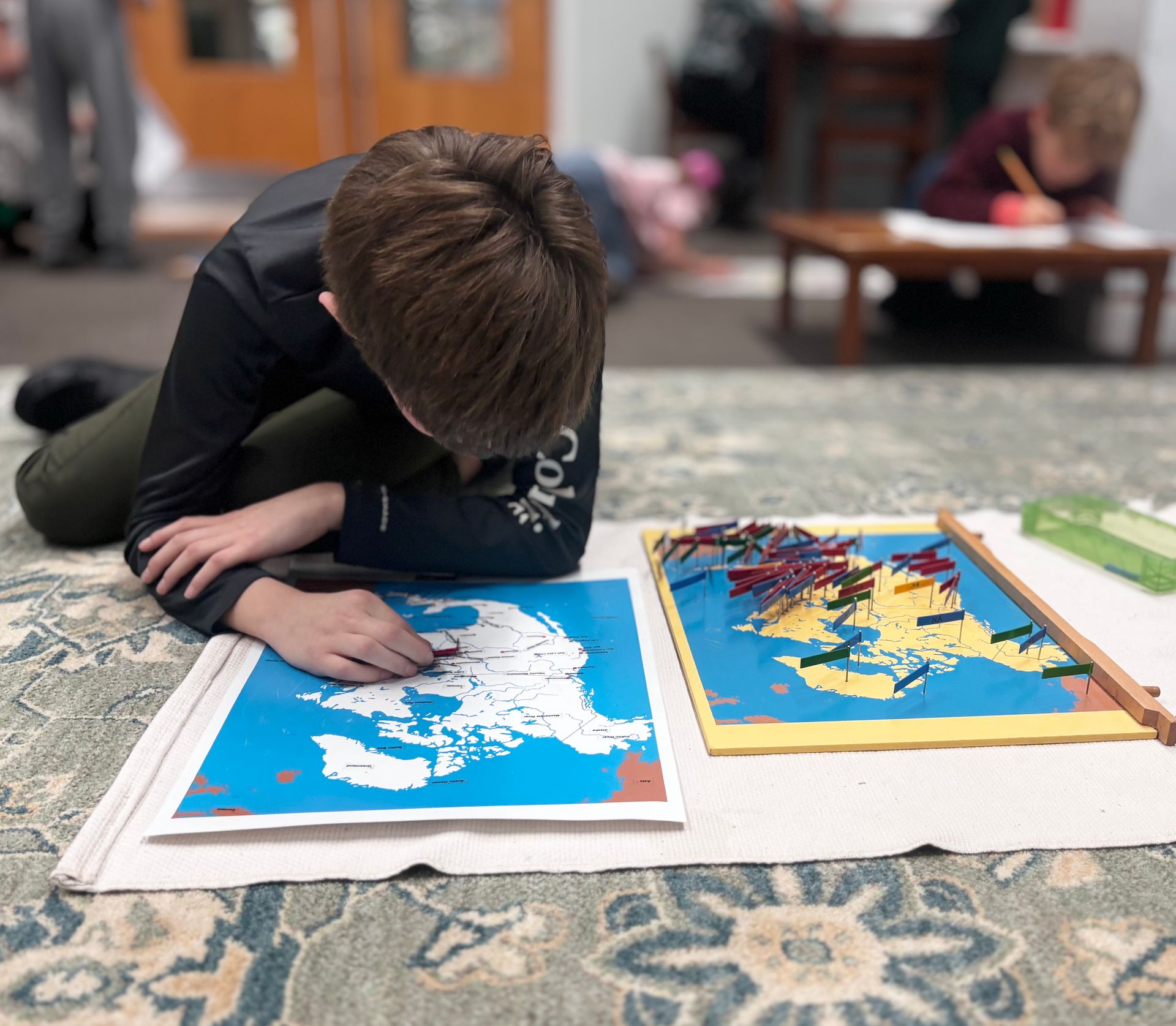
- Geography: On our five-acre campus, we emphasize our connection to the world. When children use the puzzle maps, they learn that each continent has a permanent color: North America is always orange, South America is pink, Europe is red, and so on. Whether they are looking at a globe or a booklet about African animals, Africa remains green. This consistency builds a mental map that lasts a lifetime.
- Mathematics: This is perhaps where the system is most striking. In Montessori, a quantity is associated with a specific color of bead bar. A "ten bar" is always gold, a "nine bar" is dark blue, and a "seven bar" is white. This color scheme remains consistent from the simplest counting lessons in Primary to advanced algebra and cubing in Elementary.
Strengthening Neural Pathways
We now know that color connects neural pathways and integrates different forms of intelligence. Dr. Maria Montessori recognized the power of color long before modern brain imaging existed.
When a child at Acorn learns the quantity of six, they count the six light purple beads on a bar. Over time, the brain creates a "short-cut." Eventually, the child doesn't need to count; they see "light purple" and immediately think "six." When they move into complex multiplication or distributive laws later in Elementary, these established neural connections act as a foundation, making abstract concepts feel familiar and concrete.
Leading to Abstraction
Color-coding serves as a bridge from the concrete (something you can touch) to the abstract (an idea in your mind).
- Grammar: Children analyze sentence structures using color-coded symbols—a large black triangle for a noun and a bright red circle for a verb.
- Place Value: In our decimal system materials, units are green, tens are blue, and hundreds are red. This pattern repeats through the thousands and millions, helping children conceptualize massive numbers by simply following the color hierarchy.
Experience the "Acorn" Difference
The power of color is fully integrated throughout our school to support your child’s cognitive development, memory, and—most importantly—their independence.
There are so many examples of how color brings learning to light at Acorn Montessori. We invite you to see it in action!
Schedule a tour today to see how our prepared environment fosters a lifelong love of learning.