There are times in our lives when caution and hesitation serve us well. After all, a healthy sense of self-preservation is a vital part of navigating the world safely. But finding ways to weave a sense of adventure into our family routines sparks something truly special in the human spirit. Adventure opens our children's eyes to the magic of the world and gives them a glimpse of what is possible.
When we cultivate a sense of adventure in our children, we give them a chance to discover what they are truly made of while delighting in new places and experiences.
As a wonderful bonus, novel experiences are deeply healthy for a developing brain. Modern neurological science emphasizes neuroplasticity—the brain's ability to form new neural pathways and adapt over time. The more frequently we step outside our rigid comfort zones and share novel, adventurous moments with our children, the more adaptability, curiosity, and resilience become an intrinsic part of who they are.
Here are four ways to foster a spirit of adventure with your children at home.
1. Embrace Brief Moments of Spontaneity
While rhythm, routine, and predictable structure are foundational to a child's sense of security, so is a healthy sense of flexibility. Spontaneity breaks up the monotony of daily life and introduces joyful flexibility.
You don’t need to plan an elaborate vacation to introduce spontaneity. Instead, try minor, unexpected shifts to your usual routine:
- Stay up just a little past bedtime to look at the stars or a full moon together.
- Cook or bake a recipe featuring an ingredient no one in the family has ever tried.
- Jump in the car on a weekend morning for an aimless, exploratory drive with no set destination.
- Instigate an impromptu, surprise game of hide-and-seek right before dinner.
- Rearrange the bedroom or living room furniture together to view a familiar space in a new way.
- Turn on some music and have an unexpected five-minute dance party in the kitchen.
2. Explore New Hobbies by "Following the Child"
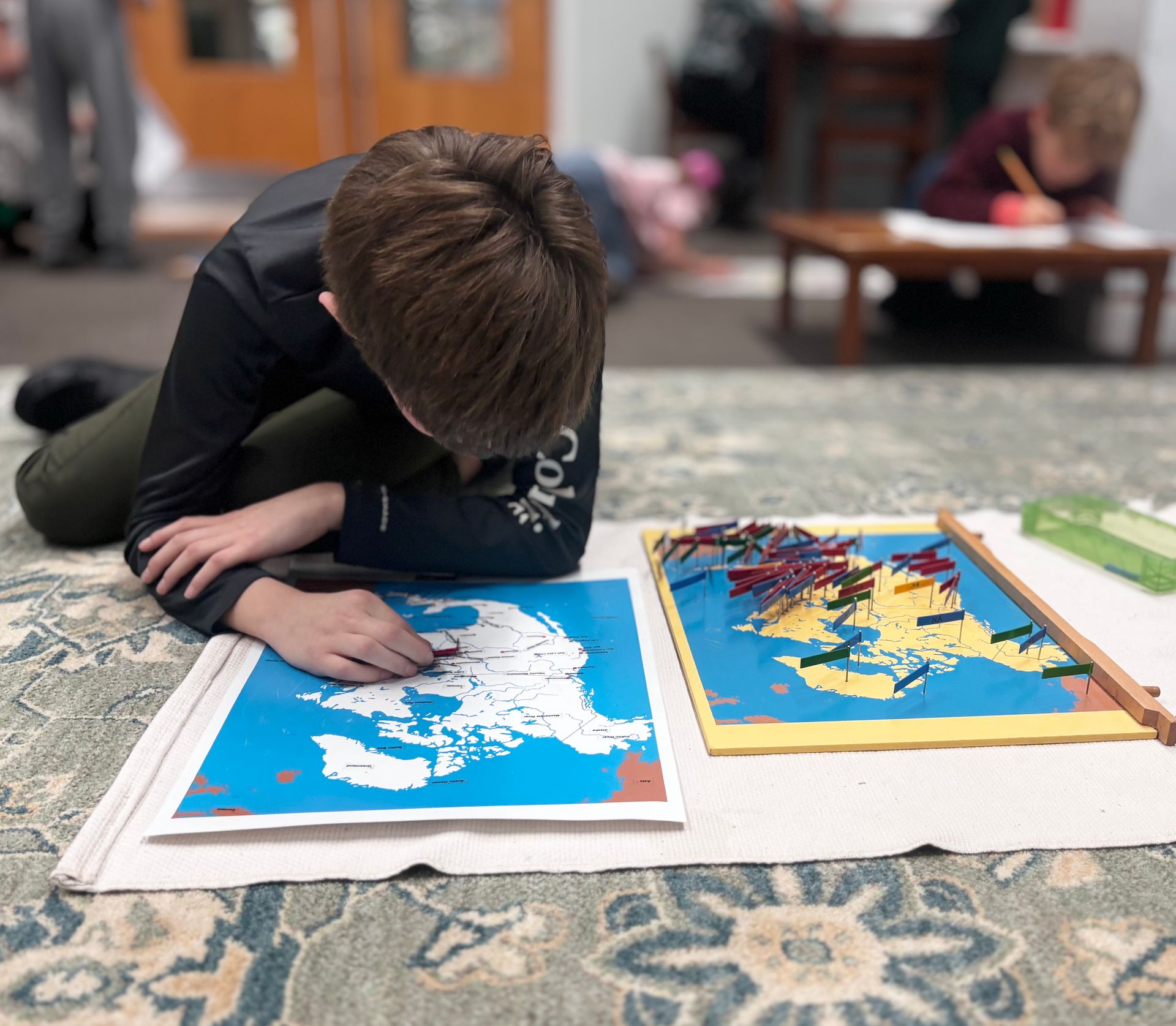
Creating common interests builds lifelong family bonds. In the Montessori tradition, we frequently use the phrase "Follow the Child." This is excellent guidance when deciding on a new hobby or project to embark on together.
Take a little time to quietly observe your child’s current passions.
- Are they fascinated by mechanics or wheels? Keep an eye out for local classic car shows, touch-a-truck events, or model train expositions.
- Do they crave artistic expression? Pick up a completely new artistic medium—like sculpting clay, watercolors, or oil pastels—and explore the material side-by-side.
- Are they musically inclined? Attend a local outdoor live performance or try learning rhythm instruments together.
The key to keeping this fulfilling is choosing a topic that you are genuinely interested in exploring alongside them, ensuring that the shared energy feels authentic and exciting for everyone involved.
3. Venture into Nature and Practice Earth Stewardship
Our bodies and our brains naturally crave time in the outdoors. Whether it is a dense forest trail, a local nature reserve, or a rocky stream, spending time in unstructured natural spaces provides an immediate neurological reset.
New Jersey is full of beautiful, underutilized trails and parks. Exploring a new path allows your child to test their footing on uneven terrain, observe local wildlife, and experience the changing seasons firsthand.
Aside from building physical confidence, spending time in nature is the perfect opportunity to teach your child how to be an active steward of the Earth. At Acorn, we advocate for teaching children the principles of Leave No Trace at an early age. When children learn to respect wildlife, pack out their trash, and leave rocks and plants exactly as they found them, they develop a profound reverence for the planet that lasts long into adulthood.
4. Provide Safe Opportunities to Test Physical Boundaries
Children are naturally active creatures. They often experience a massive burst of physical energy around 3:00 in the afternoon—precisely when we adults are starting to hit our end-of-day slump! This is the perfect window to get them moving in an environment where they can safely test their physical boundaries.
As parents, our protective instinct is incredibly strong, and we often want to yell, "Be careful!" or step in to stop a climb. However, children actually need to experience managed risks to develop accurately.
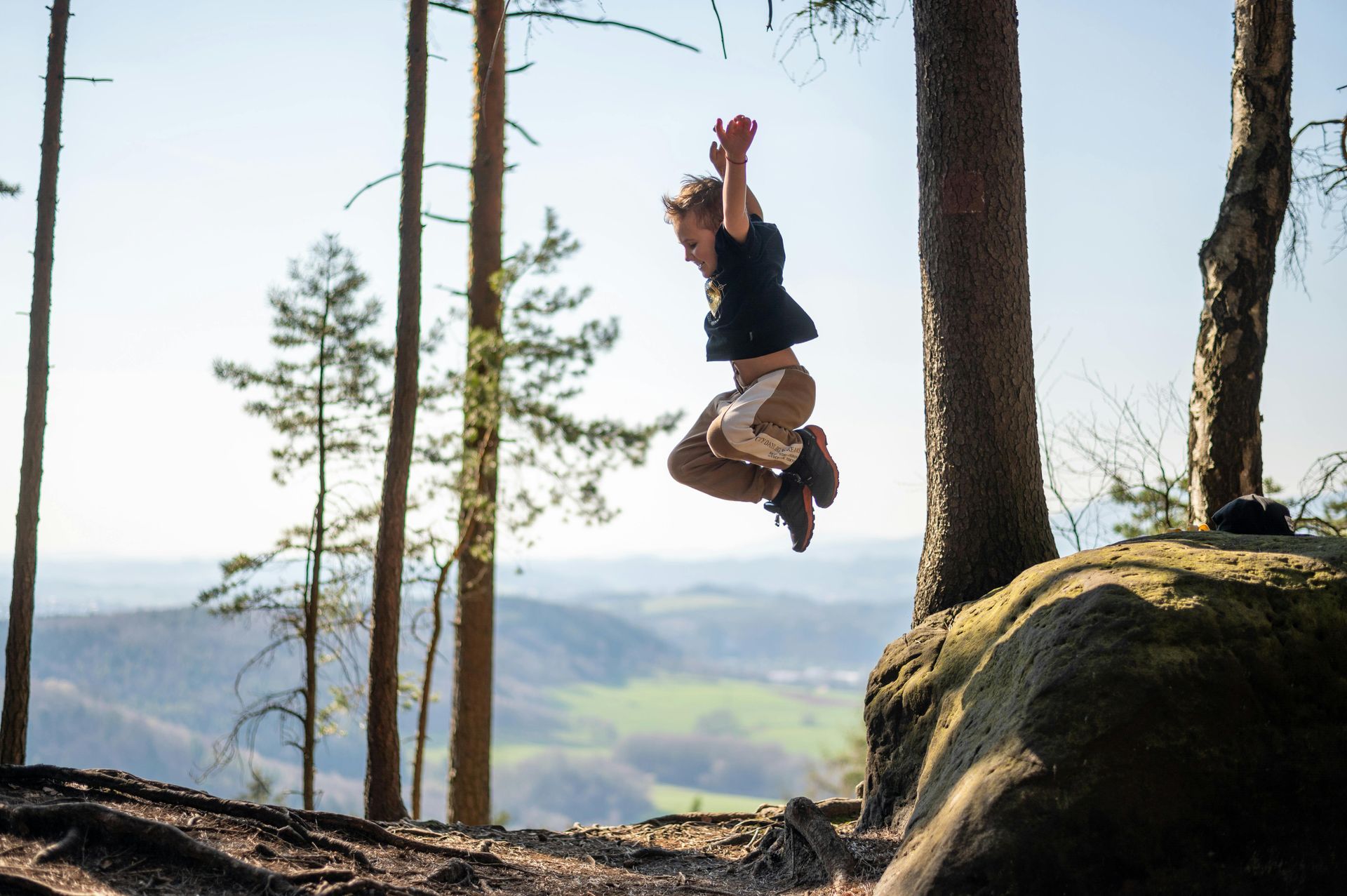
Navigating dynamic movements like climbing trees, balancing on low logs, spinning, swinging, and jumping from rock to rock builds more than just muscle strength. It directly develops two critical, internal sensory systems that are easily overlooked in early childhood:
- The Vestibular System: Located in the inner ear, this system handles balance, spatial orientation, and coordinate movement.
- Proprioception: Guided by receptors in the muscles and joints, this is your child's subconscious awareness of where their body parts are in space and how much force to apply to a task.
Navigating these challenges allows children to develop an accurate map of their physical capabilities, which directly translates into psychological self-confidence.
How to Celebrate Your Child's Courage
When your child takes a brave physical risk or successfully navigates a brand-new exploration, celebrate that internal triumph with them.
Per our Montessori practice, we want to avoid empty, evaluative praise like "Good job!" or "You're the best climber!"—phrases that teach children to look outward for validation and perform solely for adult approval.
Instead, mirror their accomplishment back to them through objective, honest observation of their effort. You might say:
- “Wow. I saw that you felt a little bit hesitant to jump down from that high rock, but you paused, found your balance, and did it.”
- “You walked across that entire log without stepping off. Your legs worked hard to keep you balanced.”
By shifting our praise from judgment to observation, we ensure that the pride of the adventure belongs entirely to the child. Adventure makes life rich, memorable, and rewarding. We wish you and your children many wonderful discoveries on the path ahead!
Are you looking for an educational community that honors your child's need for independence, movement, and hands-on discovery? We invite you to
visit our beautiful campus, tour our indoor and outdoor environments, and see our philosophy in action.