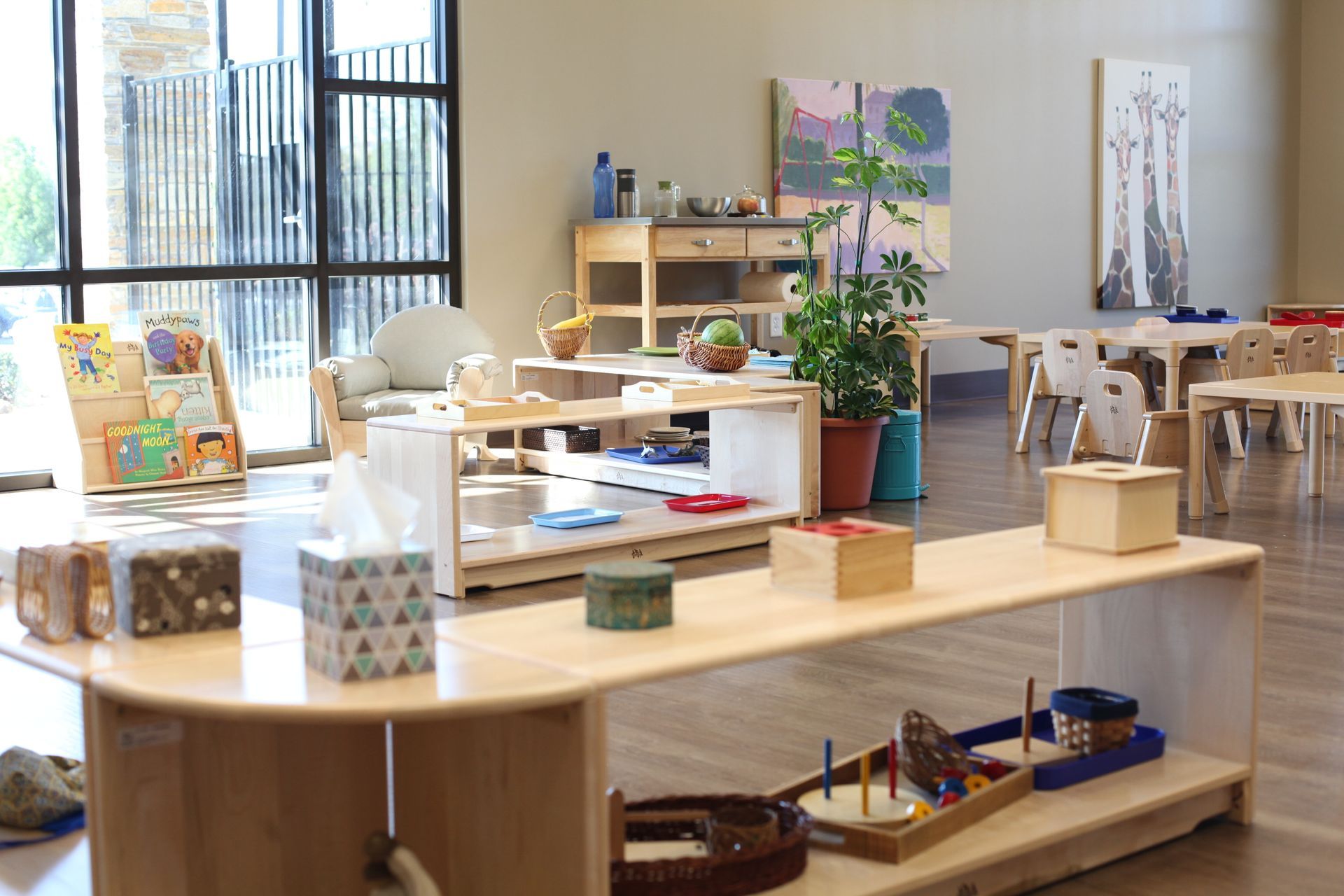
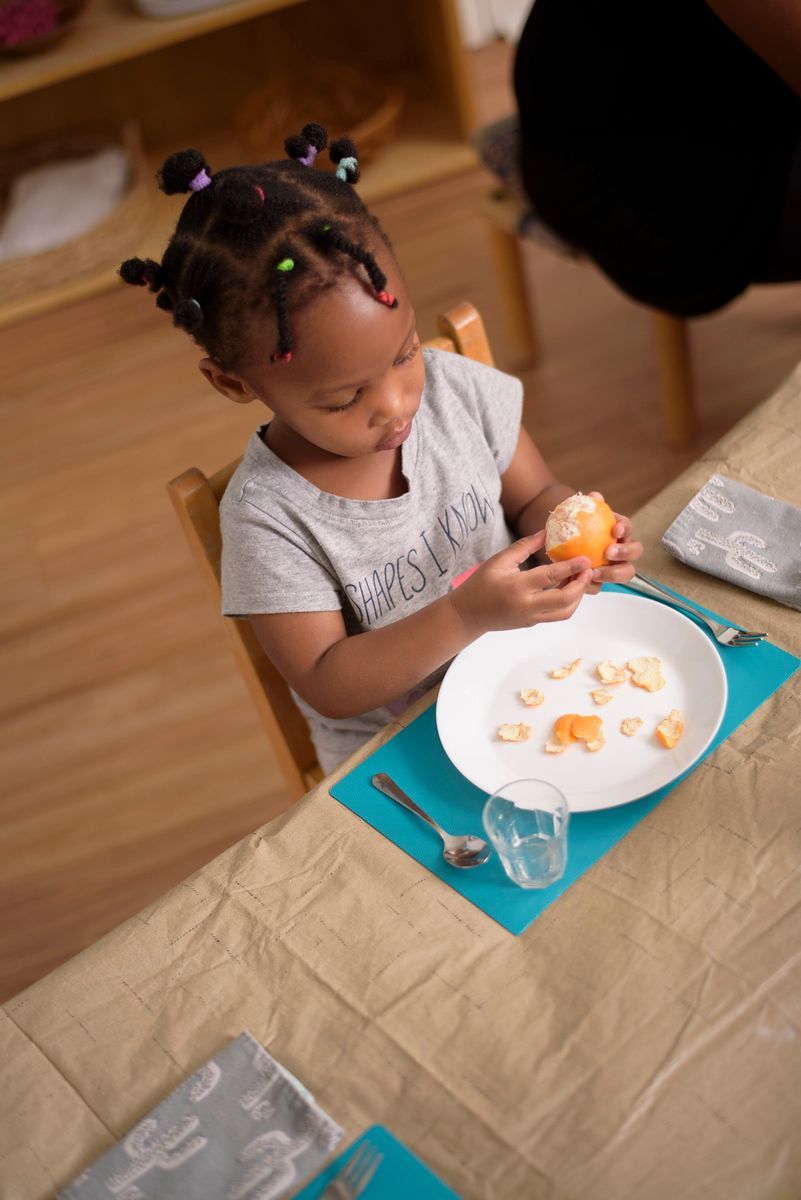
One of the many joyful aspects of the environment at Acorn Montessori School is food preparation. Learning how to prepare one’s own food is a critical life skill, and it has always been a core part of Montessori learning.
While our toddlers learn to sit together and gracefully serve and share food, at age three, our Primary students begin to prepare it for themselves. Even in our Elementary classrooms, guides find ways to integrate this important practice into the students' daily rhythm. There are many ways you can support your child’s developing skills and independence in your own kitchen.
Start Small: Give Mini-Lessons
At Acorn, we treat food preparation with the same intention as any other subject. We teach small skills in isolation and with purpose. You can adopt this same approach at home by simply demonstrating a skill, then stepping back to give your child a chance to try it themselves.
Here are some ideas to get you started:
- Cutting and Slicing: While we don’t recommend giving a four-year-old a chef's knife, there are many safe options. Using a butter knife or a kid-friendly wavy chopper is a great way to start. Try cucumbers, celery, hard-boiled eggs, or bananas.
- Spreading: This is a classic Practical Life skill. Offer a variety of spreads and surfaces, like cream cheese on a bagel, nut butter on celery, or hummus on a cracker.
- Mixing: Stirring and blending are natural next steps. Children can learn to whisk eggs, mix dip, or help combine ingredients for a family meal.
- Using Various Tools: Once they’ve mastered the basics, introduce tools like a melon baller, vegetable peeler, cheese grater, rubber spatula, potato masher, or juicer.
- Using Heat: When you feel your child is ready, move toward the toaster or the stovetop. They may enjoy making their own toast, pancakes, or tea under supervision.
- Measuring: Measuring is an excellent way to bring math into the kitchen. Following a recipe helps children understand volume, fractions, and sequence.
Provide Opportunities for Practice
Food preparation shouldn’t be a "special event." The long-term goal is for children to gain independence while building confidence.
Find ways to make this work for your family's routine. Once your child has mastered a few skills, perhaps they can be in charge of preparing their own daily snacks. As they get older, they can take on the responsibility of making their own lunch or even preparing a side dish for the family dinner.
Encourage Independence and Exploration
It can be tempting to enforce a strict plan, but at Acorn, we remember the Montessori motto: "Follow the child." If you planned to teach your child to chop carrots for dinner but they are suddenly fascinated by slicing apples, follow that interest! The experience will be far more rewarding. Whenever possible, step back. As children move into the Elementary years, let them explore cookbooks and even begin to create recipes of their own.
Teach About Nutrition
Food preparation at home is a natural way to teach your child about healthy eating. As you work with various ingredients, talk about their benefits. Understanding how different foods help our bodies grow adds a layer of scientific interest to the culinary experience.
Give Trust... and Make Room for Errors
Within reasonable safety parameters, try to step back and let your child make mistakes. Mistakes are a critical part of learning. There will be spills, smudgy faces, and perhaps a few burnt pieces of toast.
Remember: food preparation is a major part of the Montessori Practical Life curriculum. Another equally important part of Practical Life is Grace and Courtesy and Care of the Environment. When a mess happens, it is simply an opportunity to teach them how to wipe a counter or sweep the floor!
We hope this inspires you to invite your child into the kitchen this week. Enjoy the successes, embrace the messes, and have fun eating together!
Want to see our students in action?
Schedule a tour to see how Practical Life skills are integrated into every level of our school.