As parents and caregivers, we hold a beautiful, bittersweet role. While we naturally want to keep our children close and protect them, our ultimate purpose is to support and celebrate their steady path toward functional independence.
In the beginning, complete dependence is expected. Yet, if we look closely, our newborns take their very first step toward independence the moment they enter the world. Once born, they must breathe on their own. Rather than receiving passive nutrition through the umbilical cord, they use active physical effort to latch and nurse.
Throughout the first six years of life, children achieve a series of profound "conquests of independence." Dr. Maria Montessori recognized that true growth happens when we step back and allow children to do for themselves what they are developmentally capable of doing. You can use the following developmental framework as a guide and a reminder of how we can best support our children’s burgeoning independence across each plane of early childhood.
The First Year: Exploration and Separation
The first conquest of independence is birth itself, marked by the physical cutting of the cord. From this baseline, the infant begins a year of rapid physical and social milestones:
- Locomotion: As infants learn to sit up, crawl, and eventually pull themselves to a stand, they experience the joy of moving from one place to another entirely on their own. With this increased mobility, they no longer rely solely on an adult to change their scenery.
- Independent Feeding: The weaning process is a significant milestone on the path to autonomy. In a Montessori home, introducing a low weaning table and chair allows the child to sit independently for meals. Providing functional, child-sized tools—such as a small, heavy shot glass for water and manageable finger foods—allows them to feed themselves, rather than passively relying on an adult to place a spoon or bottle in their mouth.
- Healthy Separation: To become independent, children need safe opportunities to practice separating from their primary caregivers. Healthy separation depends entirely on secure attachment. Giving your infant time to play independently in a safe, prepared space without direct adult interruption allows them to build internal confidence.
- Communication: Around the end of their first year, children begin transitioning from crying, cooing, and smiling to using spoken words to express their needs. This is the cornerstone of their future social skills and their ability to relate meaningfully to the world around them.
Toddlerhood (Ages 1 to 3): Developing the Will and Self-Care
In our Toddler environment, we watch children transform into confident walkers, climbers, and active explorers. During this stage, their hands become fine-tuned tools for transformation:
- The Power of Choice: As toddlers grow, they need opportunities to develop their human will. Offering limited, structured choices (e.g., “Would you like to wear the blue shirt or the red shirt today?”) empowers them to act for themselves and exercise their decision-making muscles.
- Practical Life and Care of the Person: Toddlers are highly capable of managing basic personal hygiene. With a prepared environment—such as a stool at the sink or a accessible mirror—they can learn to brush their own teeth, wash their face, and brush their hair. They also take immense pride in learning to dress and undress themselves.
- Care of the Environment: Toddlers love functional, real-world work. They are entirely capable of cleaning up after themselves by putting toys back on a shelf, wiping up a spill with a small cloth, or using a child-sized broom to sweep up crumbs.
- Toileting Independence: Once a child can walk confidently and communicate fluidly, they can begin the natural transition to toileting independence, moving away from diapers and taking ownership of their own bodily needs.
The Primary Years (Ages 3 to 4.5): Trust and Community Care
When children enter our Primary classrooms (ages 3 to 6), they experience a massive expansion of social, physical, and emotional capabilities:
- Separation and External Trust: Entering school represents a major milestone in emotional independence. For a young child, separating from the family and entering a new classroom community helps them realize they can thrive in new environments and trust other safe adults.
- Refining the Hands: Manual dexterity becomes highly sophisticated. Children learn to master complex clothing fasteners (zippers, snaps, buckles, and bows), allowing them to manage their outerwear entirely on their own.
- Food Preparation: In the Primary classroom, children safely slice fruit, spread jam, and prepare snacks using real, sharp tools. Research consistently shows that when children are actively involved in preparing their own food, they are far more adventurous eaters.
- Emotional Literacy: Vocabulary expands rapidly during this window. Children aren't just learning the names of objects; they are learning a rich vocabulary for emotions. They develop the ability to use language to express precise feelings and thoughts, which reduces frustration and fosters peaceful conflict resolution.
- Contributing to the Community: Independence shifts from “I can care for myself” to “I can care for our community.” Children take on responsibilities like setting real tables for lunch, arranging fresh flowers for the classroom, and folding linens.
The Kindergarten Year (Ages 4.5 to 6): Leadership and Abstraction
The final year of the Primary cycle is a time of culmination. The older children in the multi-age classroom step into a leadership role, utilizing their accumulated skills to support their community:
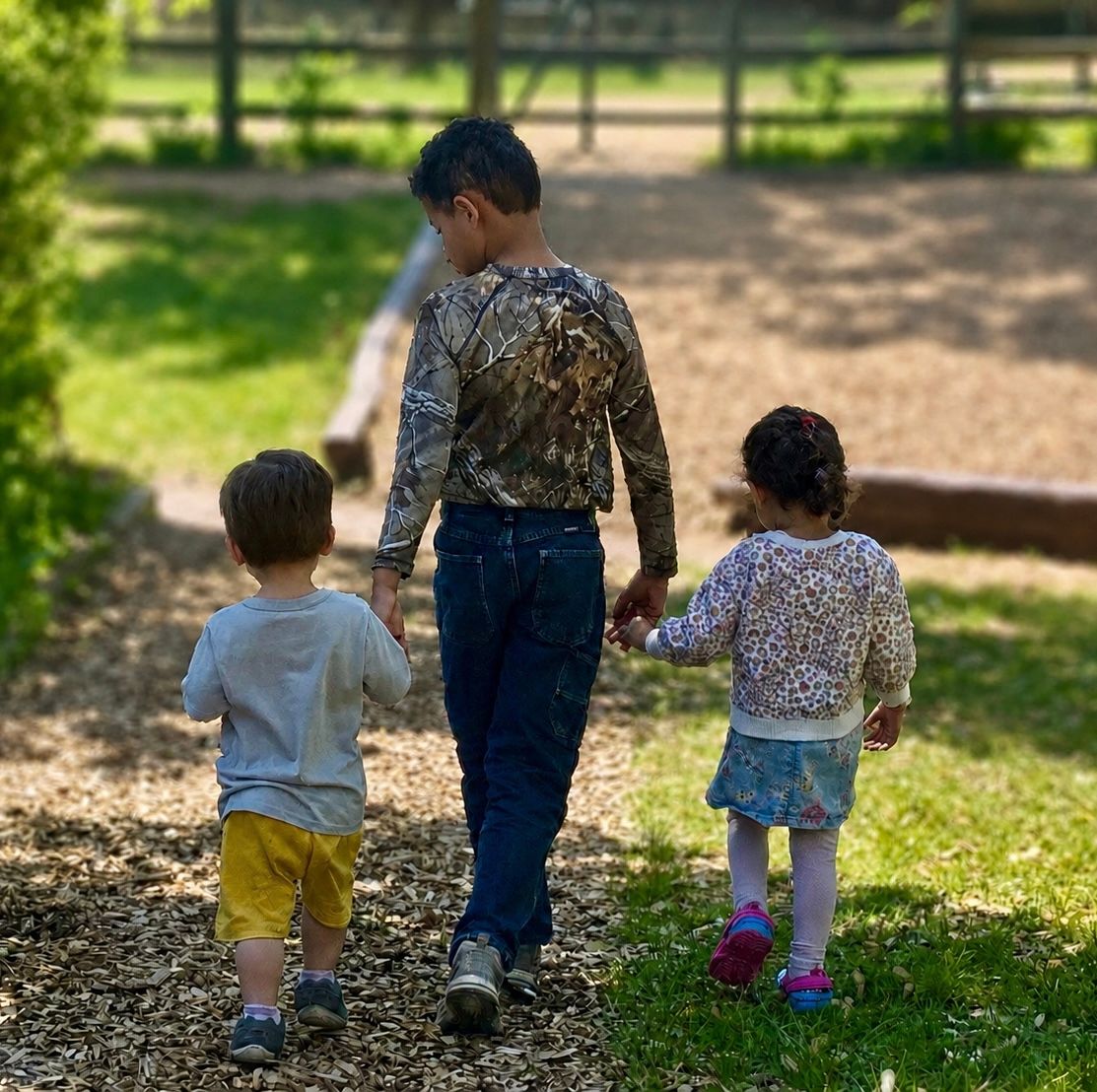
- Social Independence & Empathy: Older children fully internalize the social norms of their classroom community (practicing what we call Grace and Courtesy). They push in their chairs, warmly greet campus visitors, and respectfully communicate when they need focused space. They also demonstrate deep empathy, regularly stepping in to help a younger peer zip a jacket or clean up a dropped tray.
- Mathematical Reasoning: Rather than simply repeating numbers by rote, children develop a deep, concrete understanding of mathematical quantities and how they are symbolically represented through hands-on materials.
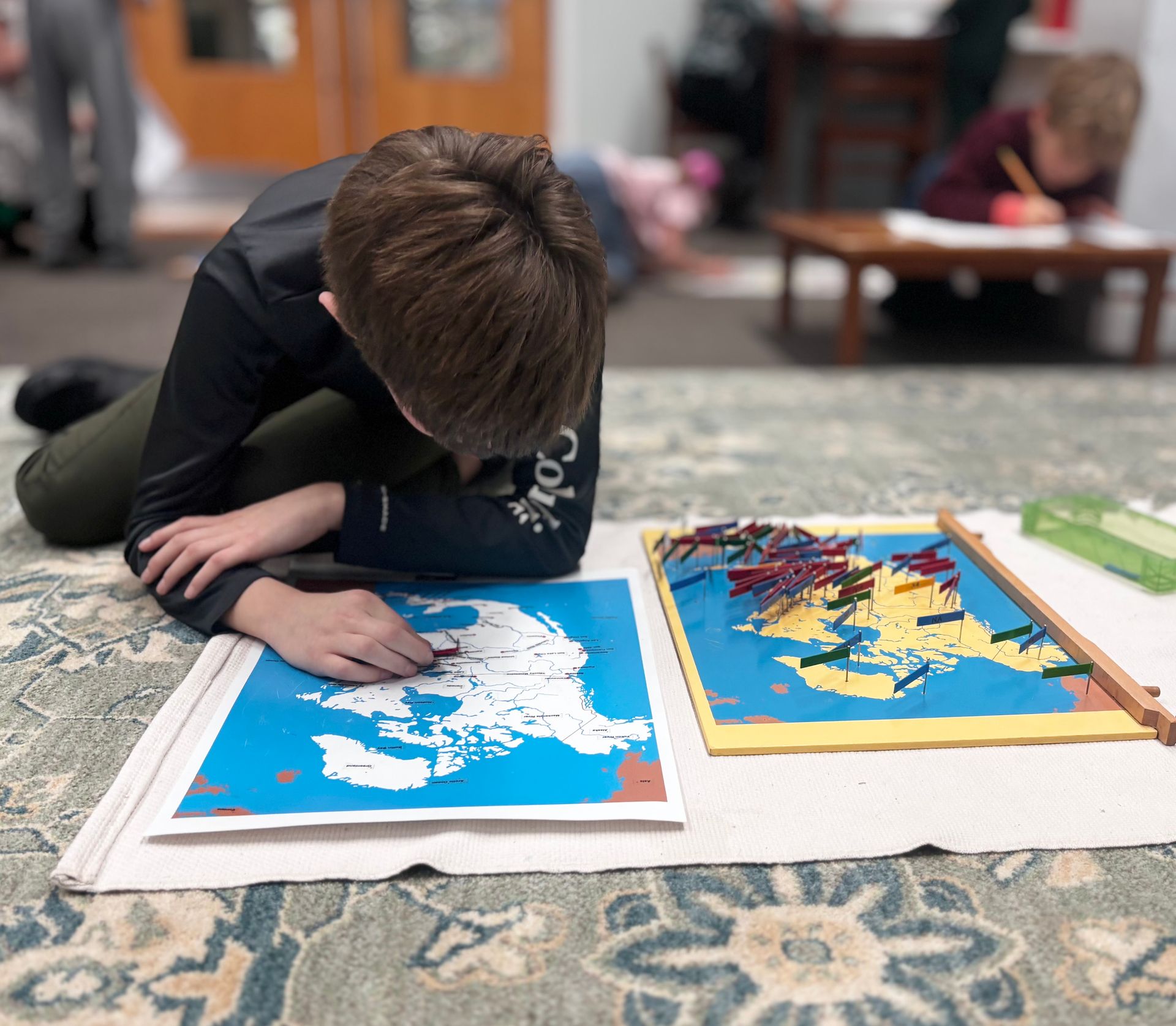
- The Explosion into Literacy: Children begin to recognize and manipulate the phonetic symbols of our language. They experience the classic Montessori "explosion" into writing and reading, moving from spelling out their own thoughts with the Moveable Alphabet to joyfully decoding the text written by others.
Supporting the Journey
Ultimately, these conquests of independence are about helping your child become functionally autonomous. Young children are on a lifelong quest to master their own movements, thoughts, and daily lives. They do not want us to do the work for them; they are quietly asking us, "Help me to do it myself."
When we intentionally step back, prepare our homes to be accessible, and honor their capability, we give our children a deep sense of dignity, resilience, and confidence. Would you like to see how our beautifully prepared environments set children up for independence at every stage of development? We invite you to
see our philosophy in action.