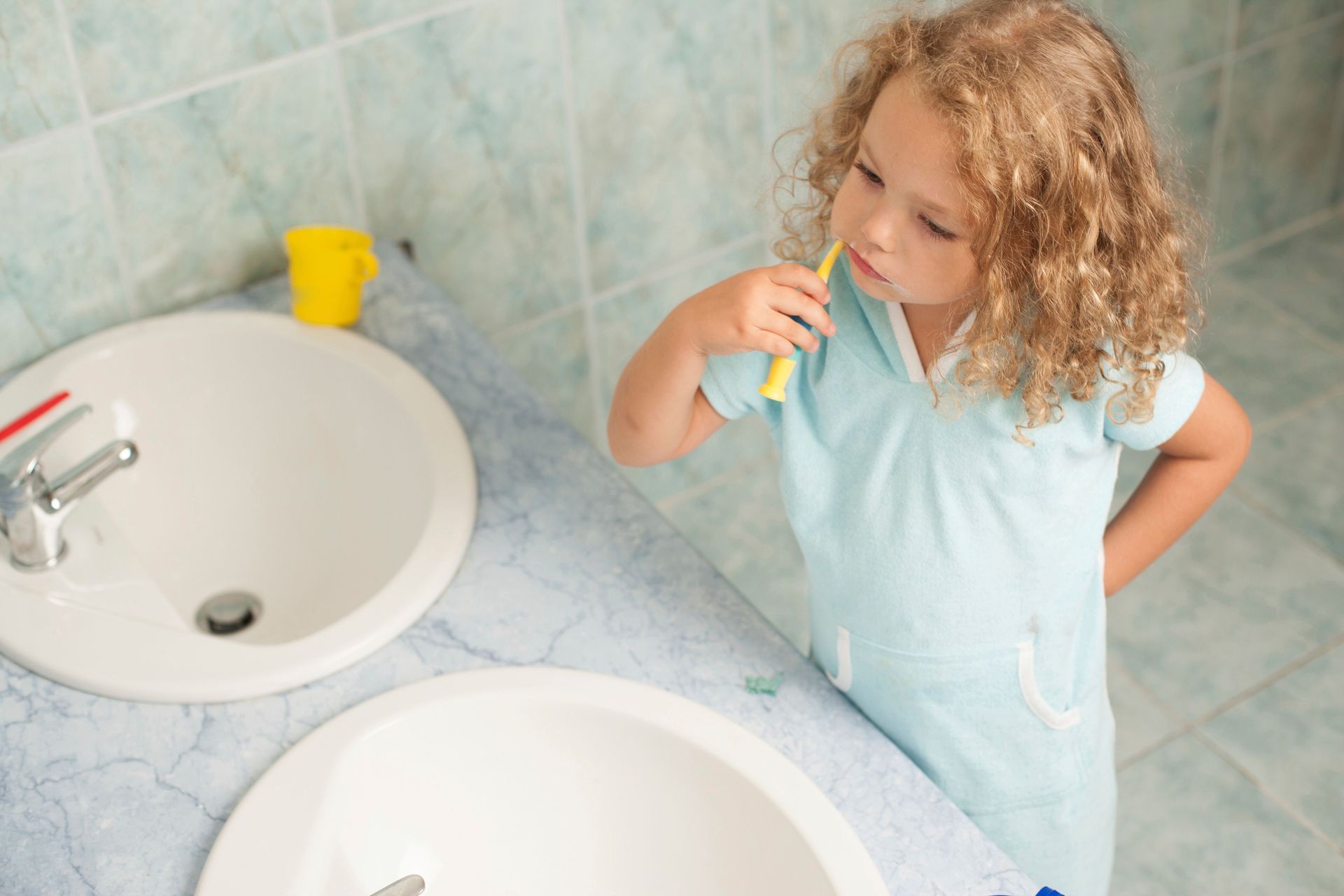
In a Montessori environment, significant emphasis is placed on young children learning basic self-care skills through Practical Life exercises. A foundational aspect of self-care is a routine we perform at least twice a day: brushing our teeth. This particular habit requires a thoughtful approach; our goal is to foster the child's absolute independence while simultaneously ensuring their dental health remains clean and cavity-free.
While shifts in classroom protocols occasionally modify how practical life activities are presented at school, the core principles transfer seamlessly to the home. Introducing toothbrushing does more than establish a lifelong oral hygiene habit; it directly cultivates a child's internal sense of capability. By partnering deliberately in this process, parents and caregivers ensure that children build a necessary life skill rather than becoming dependent on adult intervention.
The Anatomy of a Presentation: Isolating the Steps
When demonstrating toothbrushing to a young child, the adult must consciously isolate and slow down every physical movement. Because adults rely on habit and muscle memory, we move through the sequence automatically. A young child, however, must consciously process each individual component.
To help children retain the sequence, we utilize Points of Interest—subtle, intentional benchmarks that focus a child's attention on key mechanics. This process is most meaningful when embedded in a real-life context. Therefore, the ideal time to introduce toothbrushing is immediately following a meal, allowing the child to make a direct causal connection between eating food and cleaning their teeth.
Step-by-Step Guide: Establishing the Home Routine
Every family can establish a consistent, Montessori-aligned toothbrushing workspace using this structured sequence.
Phase 1: Gathering and Arranging Materials
- Select the Toothbrush: Use a small, child-sized toothbrush that fits comfortably in a child's hand. Ensure the brush head has a protective enclosure or case, and clearly designate ownership (such as attaching a small photo of the child to their container).
- Prepare the Setup: Model taking your toothbrush out of its holder and placing it onto an organized tray. Invite the child to mirror this step.
- Prepare Pre-Portioned Toothpaste: To prevent a child from using excessive toothpaste, prepare individual portions in advance. A clean contact lens case works perfectly as a low-waste, child-sized portion container.
- Demonstrate Access: Model opening and closing the toothpaste container, then place it closed on the tray. Closing the container immediately communicates that the material is prepared but not yet ready to be applied. Invite your child to do the same.
- Prepare the Rinsing Water: Fill a small glass or stainless-steel cup approximately one-quarter full of water. Use a cup that looks distinctly different from standard drinking glasses to signal its specific function for rinsing.
Phase 2: Application and Execution
- Apply Toothpaste: Open the pre-portioned container. Model holding the container firmly with one hand while gently wiping the toothbrush bristles into the paste.
- Close the Container: Set the toothbrush down on the tray and use both hands to close the toothpaste container before beginning to brush.
- Demonstrate the Brushing Technique: Open your mouth wide and move slowly. Begin on the left side:
- Brush the top teeth with clear, deliberate downward strokes.
- Pause and brush the undersides (chewing surfaces) of those top teeth.
- Brush the inside surfaces of the top teeth with downward strokes.
- Move to the bottom left teeth, utilizing clear upward strokes across the outer, chewing, and inner surfaces.
- Mirror and Repeat: Pause between each quadrant to let the child mirror your movements, then repeat the sequence on the right side. Finish by lightly brushing the tongue.
Phase 3: The Order of Clean-Up
- Spit and Rinse: Explicitly demonstrate spitting excess toothpaste into the center of the sink. Take a small sip of water from the cup, swish it thoroughly around the mouth, and spit it directly into the drain. Use a small hand towel to dry your mouth.
- Sanitize the Tool: Rinse the toothbrush bristles under running water for a few seconds, tap the brush head firmly against the side of the sink to remove excess moisture, and return it to its enclosure.
- Restore the Space: Model carrying used items to a designated cleaning area or dish cart to be washed, establishing a complete cycle of work.
Operational Guardrails: Balancing Independence with Hygiene
In the school setting, educators model the process and allow the child to practice entirely independently to develop manual dexterity and focus. At home, maintaining proper hygiene requires a collaborative boundary.
We recommend establishing a clear agreement with your child: the child takes the first turn, and the adult takes the final turn. This is to make sure the teeth are absolutely clean at the end of the process.
What a Collaborative Turn Looks Like
- The Hand-Over-Hand Method: Gently place your hand over your child's hand, guiding the toothbrush through the correct upward and downward strokes to reach back molars effectively.
- The Shared Turn Method: Establish a predictable routine where the child brushes independently first and then calmly hands the brush to you for a final inspection and completion.
Just as we avoid coloring in a drawing for a child who is learning to use crayons, we must avoid taking over the entire toothbrushing process. Allowing the child to lead builds coordination and self-belief. Simultaneously, upholding the adult's turn ensures their teeth remain cavity-free.
Operational Next Steps for Families
To implement this workflow successfully, prioritize these environmental setup steps this week:
- Clear a accessible shelf or drawer in the bathroom at your child's height.
- Secure a small tray, a dedicated rinsing cup, and a travel-size toothbrush container.
- Prepare a pre-portioned toothpaste container (such as a contact lens case).
- Introduce the routine calmly after a weekend breakfast or dinner when time is unhurried.
We wish you great success in establishing this supportive routine at home. If you would like to observe how we cultivate functional independence and self-care across our programs, we invite you to schedule a campus tour.