You know Montessori classrooms are different from most. You may have heard the rumors: children run around doing whatever they please—it’s "all play and no work." Or perhaps you’ve heard the opposite: that the structures are so rigid they stifle creativity.
What is it really like at Acorn?
We can practically guarantee that once you step inside our Lebanon campus, sit quietly in a corner, and observe the children at work, your impressions will be transformed. We encourage parents to observe whenever possible; our students are accustomed to visitors, and we have protocols to ensure your presence is unobtrusive to them but deeply informative for you. In the meantime, this post offers a glimpse into a typical day in a high-fidelity Montessori environment.
The Arrival Ritual
From the moment they step through our doors, expectations are different for Acorn students, even our youngest Toddlers. Children are responsible for hanging their own bags and coats on hooks at their height. They learn to change into indoor shoes or slippers—a practice that keeps our classrooms clean and creates a "home-like" boundary between the outside world and their place of learning.
Our Guides greet each student individually. They make a point of shaking a child’s hand, looking them in the eye, and using their name. By modeling this polite interaction daily, we help children develop the grace and courtesy they will carry with them for the rest of their lives.
The Work Period
The "Work Cycle" is the hallmark of the Montessori approach. We believe children need long, uninterrupted stretches of time to involve themselves deeply in independent work.
- Toddlers: Enjoy a 1–2 hour morning work cycle tailored to their developing coordination and concentration.
- Primary (Ages 3–6): Typically enjoy a three-hour morning work cycle.
- Elementary: Often have both morning and afternoon cycles to dive into complex projects.
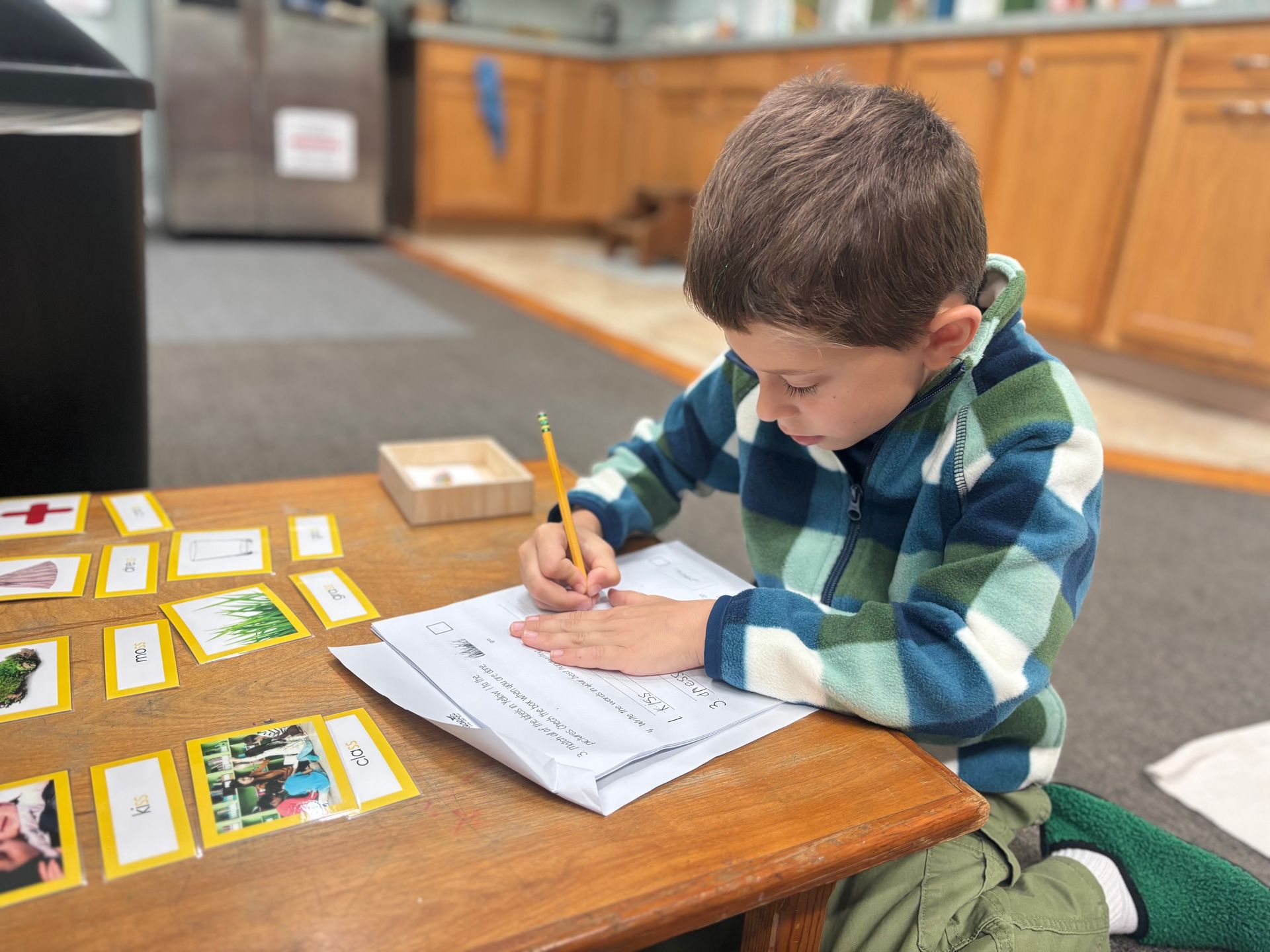
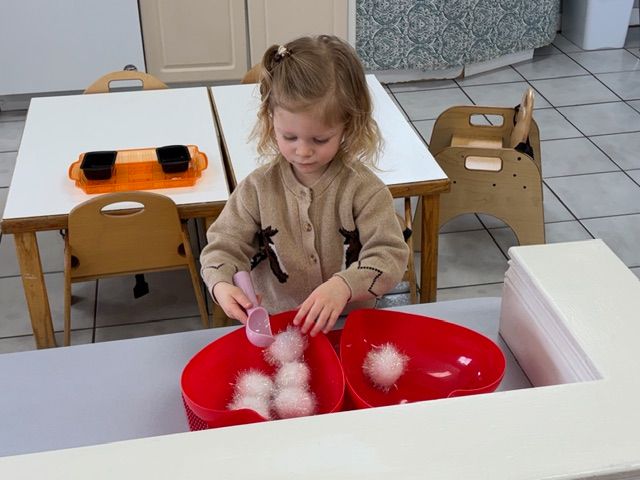
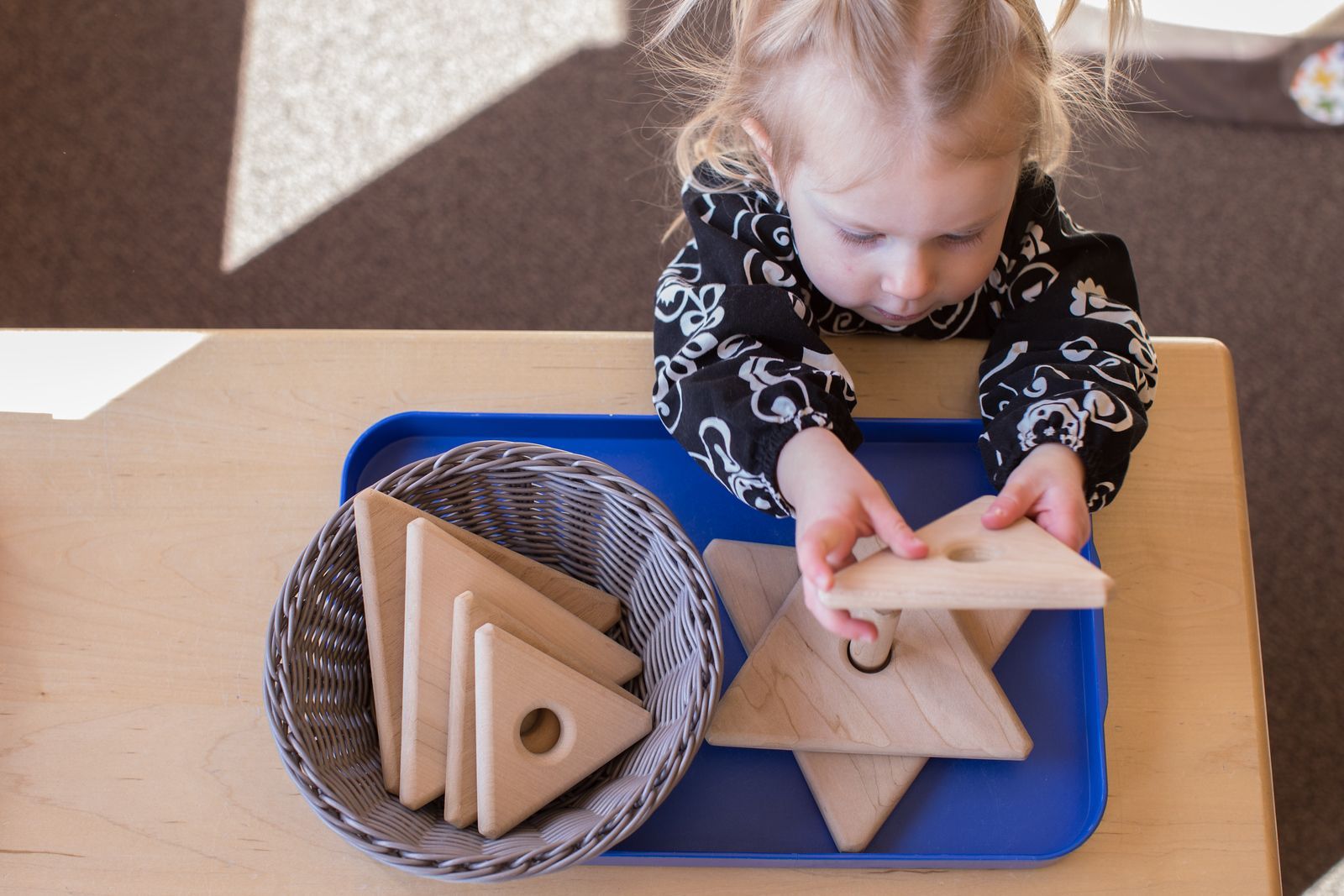
During this time, children work independently while Guides give small-group or individual lessons. To an outsider, it may look like play, but this "play" is the serious work of development. What looks like a simple puzzle is often a manipulative biology diagram; what looks like pretty colored beads are tools for exploring complex mathematical concepts into the thousands.
Freedom of Movement
At Acorn, we respect the child’s physical needs. Students are free to move around the room, choose where they sit (at a table or on a floor mat), and use the restroom without needing adult permission. This trust fosters a sense of ownership over their environment and their body.
Nurturing the Social Self
We educate the "whole child," which includes deep support for social development. Unlike traditional settings with assigned seating, we allow children to choose whether to work independently or cooperatively. As children move into the Elementary years, they focus heavily on the "work" of friendship. Our Guides are trained to help children navigate the natural conflicts that arise. We teach mediation strategies, inclusivity, and conflict resolution proactively through role-playing and storytelling, helping children build a toolkit for healthy relationships.
The Role of the Guide
At Acorn, we use the term "Guide" rather than "Teacher" because it best describes the task. Instead of standing at the front of the room lecturing, the Guide "lays a path" and provides the tools for exploration.
- Observation is Key: The Guide’s primary job is to observe. They take detailed notes on which skills a child has mastered and where they need more support. These observations inform every lesson plan and every parent communication.
- The "Hand-Off": A delicate task for any Guide is knowing when to step in and when to stand back. By allowing a child to find their own solution to a problem, we build their resilience and confidence.
Still Curious?
There is no substitute for the real thing. We invite you to see the focus, the order, and the joy of an Acorn classroom in action. Click here to schedule a tour and observe a classroom at Acorn Montessori School.