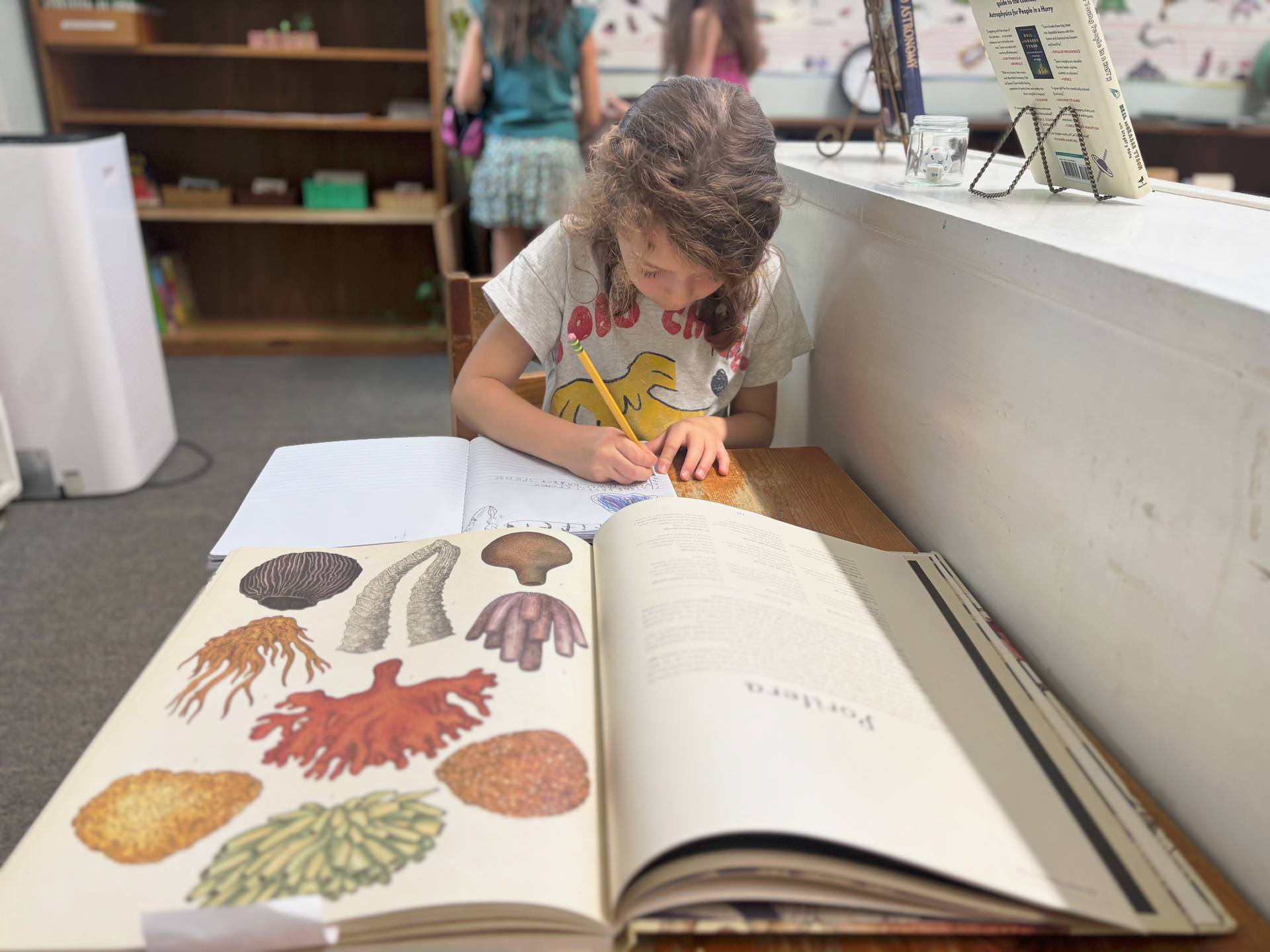
At Acorn Montessori School, visitors and prospective families are often amazed by what they see when they walk through our classrooms. They notice a profound sense of calm, a deep level of focus, and children who bounce into school each day genuinely excited to learn. As these children grow into adulthood, they tend to become driven, independent, and innovative thinkers.
How do we cultivate this lifelong attitude toward the world? How do we guide our children to want to learn, to discover, and to always pursue growth without being told they must? The key lies in the type of motivation we utilize.
The Limits of External Rewards and Punishments
In many traditional educational settings, adult-driven systems of rewards and punishments are used to manage behavior and encourage academic performance. Most of us grew up experiencing this, and as parents, it can be incredibly easy to rely on these tactics at home, too. These are extrinsic motivators, and they are more common than we might realize.
- Rewards are positive and external. They include gold stars, stickers, behavior charts, extra playtime, or pizza parties in exchange for finishing a task. Even constant verbal praise (“Good job!”) or letter grades function as external rewards.
- Punishments include negative external motivators, such as the removal of privileges, time-outs, or poor marks.
There are even more subtle external motivators we use without thinking, such as a facial expression or tone of voice that signals our immediate approval or disapproval. While these tactics can work in the short term to get quick compliance, decades of educational research show they do very little for long-term psychological and academic success. In fact, when the external reward disappears, the behavior usually disappears with it.
Protecting the Intrinsic Motivation We Are Born With
Fortunately, human beings are born wanting to learn. From our youngest walking infants in the Toddler program to our collaborative Elementary students, children are naturally curious. They possess an innate capacity to work for the sheer joy of discovery. This is intrinsic motivation.
Think of a time in your own life when you accomplished something meaningful. How did you feel? Were you focused on how others would praise you, or were you satisfied with your work for its own sake?
In our Montessori environments, we carefully protect this internal satisfaction. When a child excitedly runs up to a guide to show off a completed map or a long chain of math beads, our natural adult instinct might be to say, "Good job! I'm so proud of you!" However, if we constantly reward children with our emotional approval, they begin working to please us rather than satisfying their own curiosity.
Instead, Acorn guides use objective, encouraging language that keeps the drive centered inside the child. We might say:
- “I noticed you kept trying even when that layout was challenging. How do you feel now that it’s complete?”
- “Look at all the detail you put into drawing those continent boundaries. You worked on that for a long time.”
- “It looks like you really enjoyed that research. What do you think you’ll explore next?”
These factual observations acknowledge the child's effort without imposing our own judgment on their experience, ensuring that the pride of accomplishment belongs entirely to them.
How the Acorn Environment Drives Learning
How do our guides inspire children to engage with challenging academic concepts without gold stars or traditional grading systems?
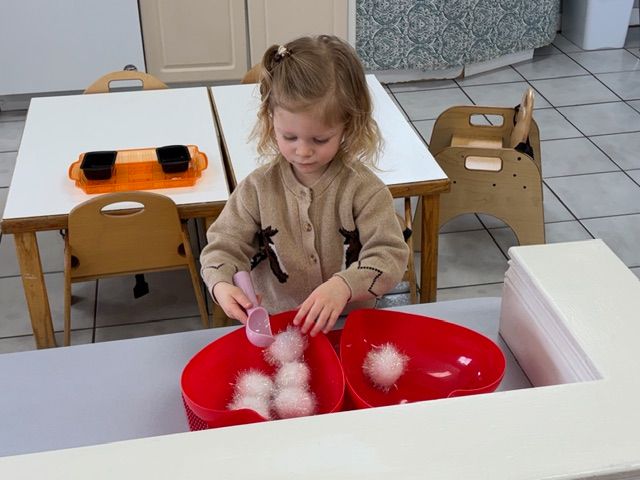
First, we honor their capability by calling their classroom choices "work." Whether a three-year-old is carefully scrubbing a table or a nine-year-old is researching the solar system, we let them know we recognize that what they are doing is important and purposeful.
Second, we prepare a beautiful, intentional environment tailored to their specific developmental needs. Our classrooms feature carefully structured structures that support internal drive:
- Autodidactic Materials: Most Montessori materials possess a built-in "control of error." For example, if a child is placing wooden cylinders into matching holes and makes an error early on, the final cylinder will not fit into the remaining space. The material itself provides the feedback, allowing the child to self-correct independently without a teacher pointing out a mistake.
- Following individual Interests: Our guides are experts at leveraging a child’s natural passion to help them build skills in areas that challenge them. A reluctant reader who loves dinosaurs will suddenly find a beautifully curated basket of dinosaur books on the shelf. A student who avoids math but thrives on social connection will be invited to solve large multiplication operations collaboratively with a peer.
- The Uninterrupted Work Cycle: Our schedule provides children with an extended, uninterrupted block of time in the morning. This structural freedom allows students to select work that is deeply meaningful to them, settle into it, and experience true "flow"—the state of deep concentration where authentic creativity and lasting learning take place.
Preparing for a Lifetime of Success
When we support children in listening to their own internal compass, we are preparing them for a sustainable, successful future. At Acorn, school isn’t a place where children passively sit to have information delivered to them in exchange for a grade. It is a vibrant community where they look forward to coming each day so that they may joyfully discover the world for themselves.
Schedule a visit here to see it in action!