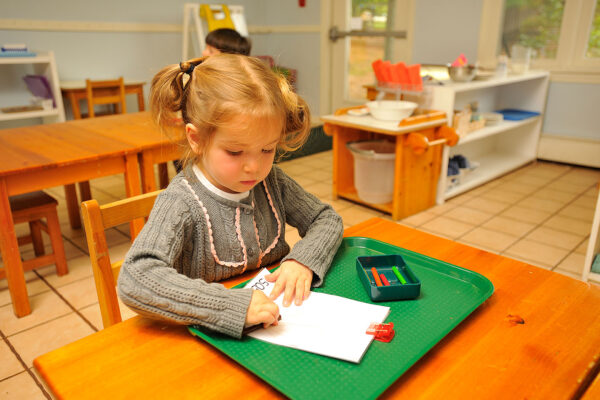
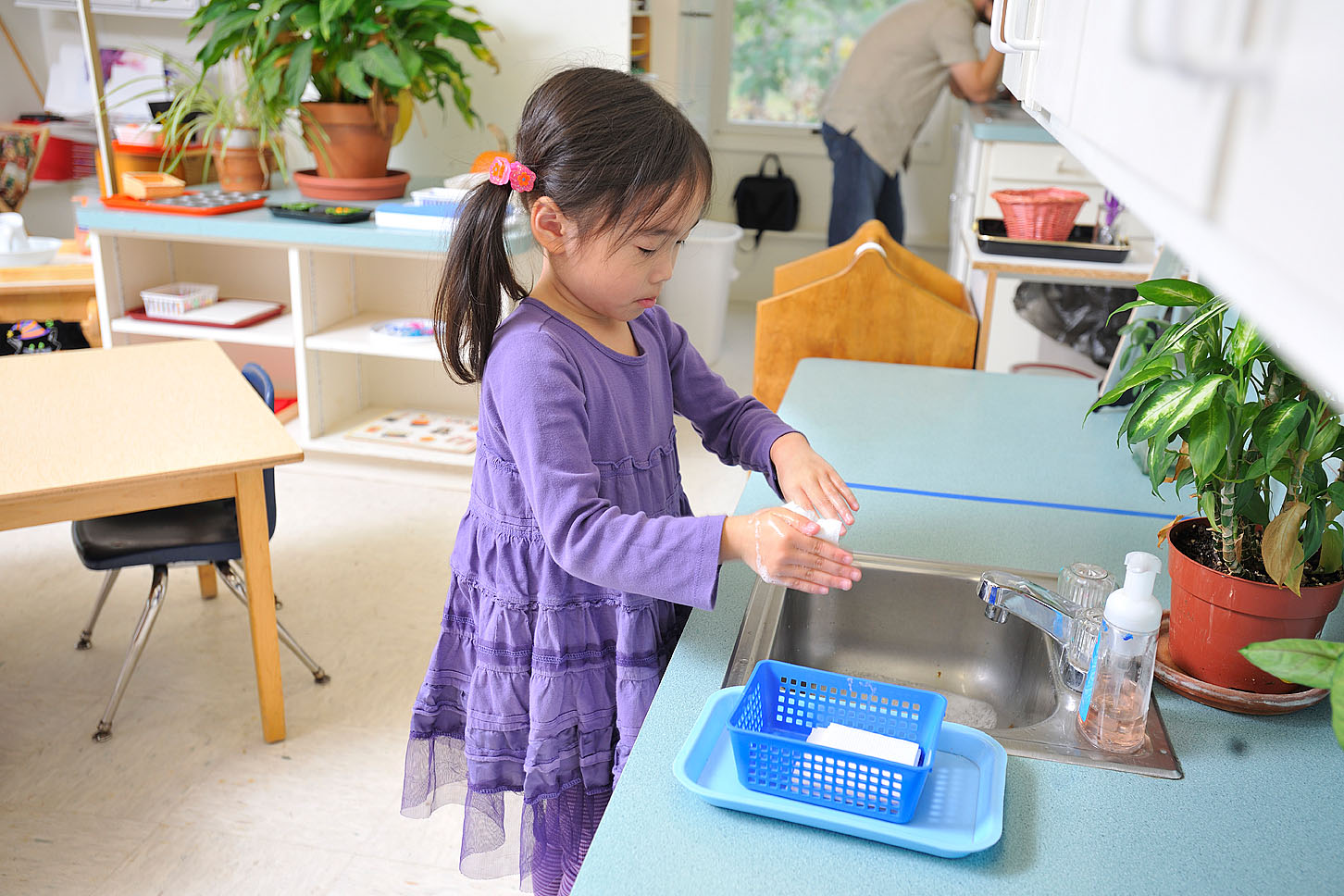
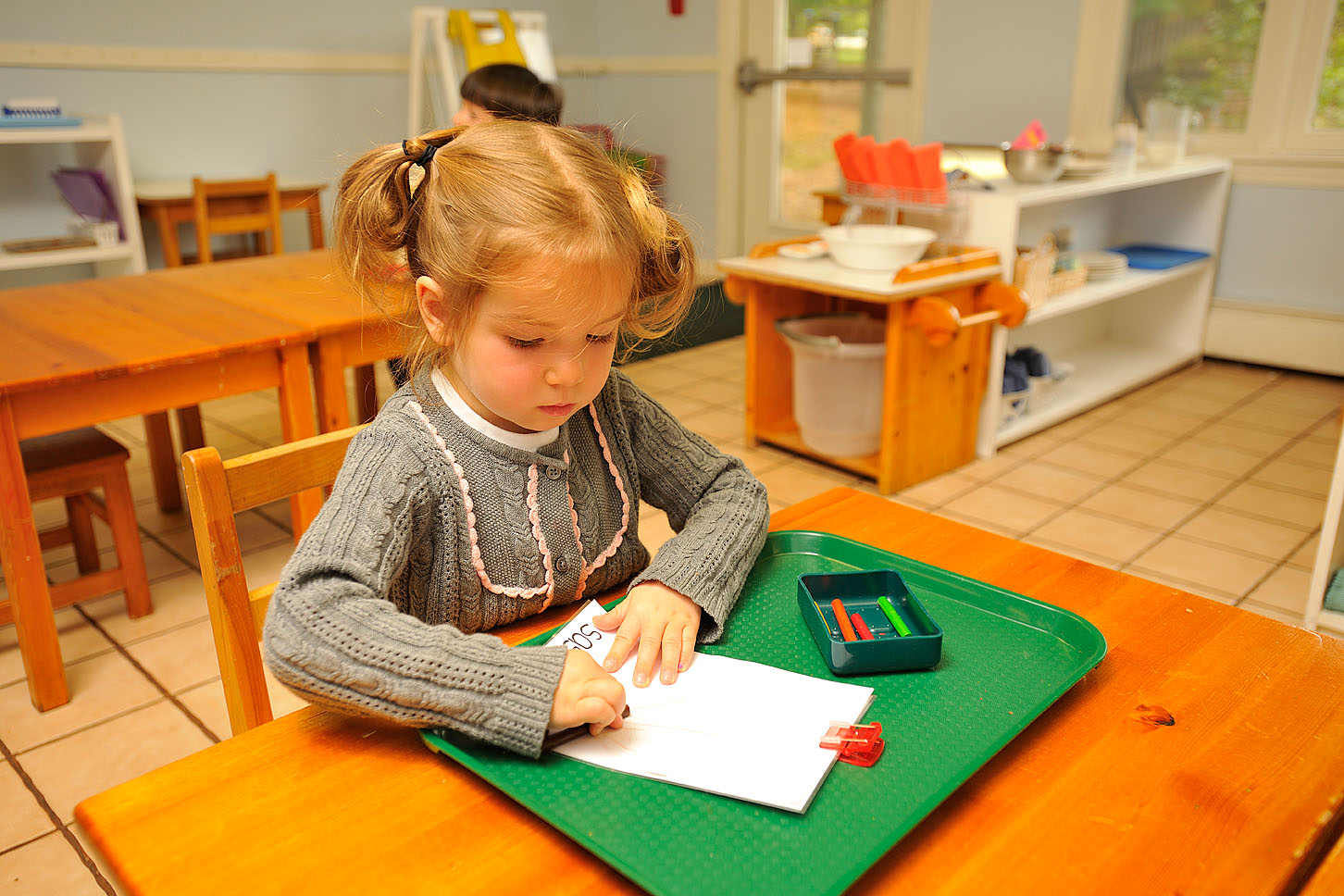
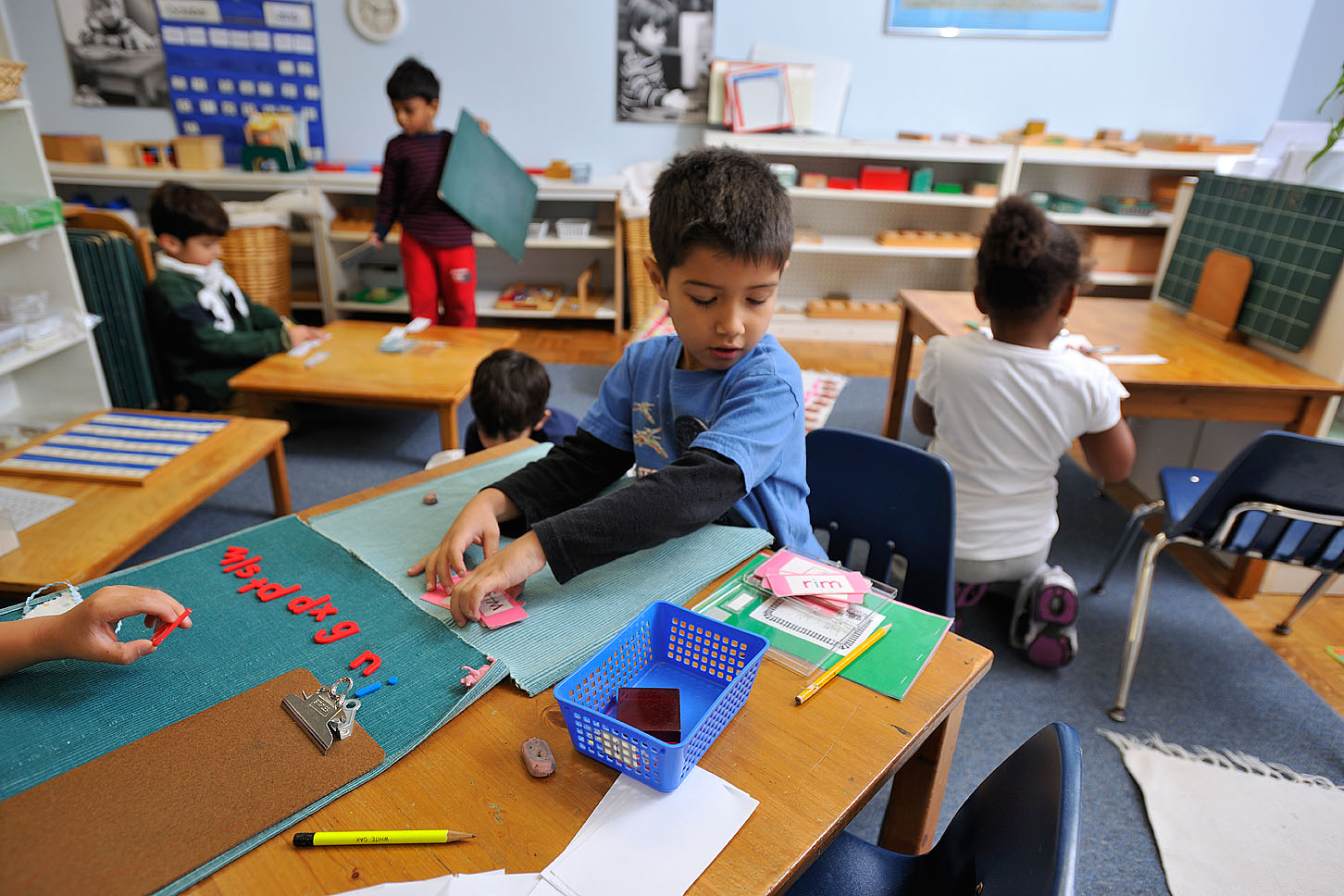
As young children begin exploring beyond the bounds of their own immediate surroundings, the Montessori Method—and the Acorn Montessori School—are prepared to help nurture their emerging curiosity, their sense of discovery, and their creativity. Our Primary classrooms, created for children ages 3 through 6, have been designed to foster the development of their linguistic, cognitive, and motor skills. They �also help children explore the important roles they have to play within their family, �their community, and their culture. All of Acorn’s primary classrooms are located in the Children’s House. Each room is warm and comforting with carpeting and large windows for ample natural lighting and all are fully air conditioned.
Nurturing Emerging Growth
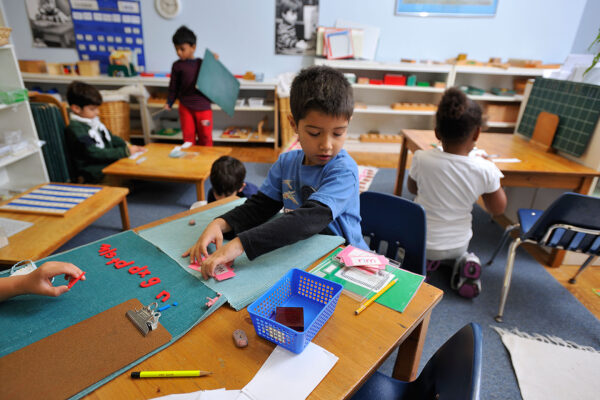
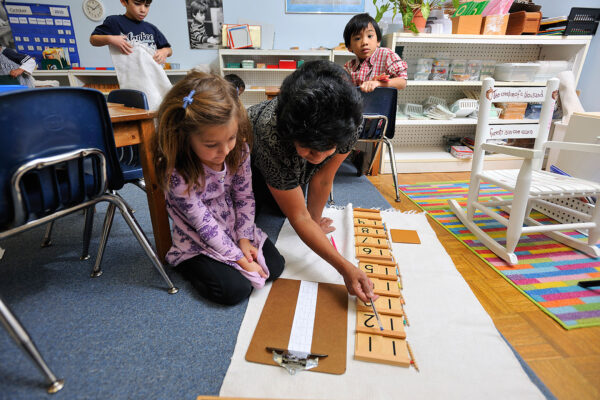
Reading, writing, math, and other cognitive skills are encouraged and developed in this program, as we introduce a number of activities designed to foster both logical reasoning and abstract thinking. However, while we begin to incorporate academic components into each child’s day—with sequential work in the arts, language, math, geography, and the science—we do so in such a way that makes learning a joyful experience. Children work both on their own and as parts of small groups, giving them the freedom to explore while teaching them the importance of cooperation.
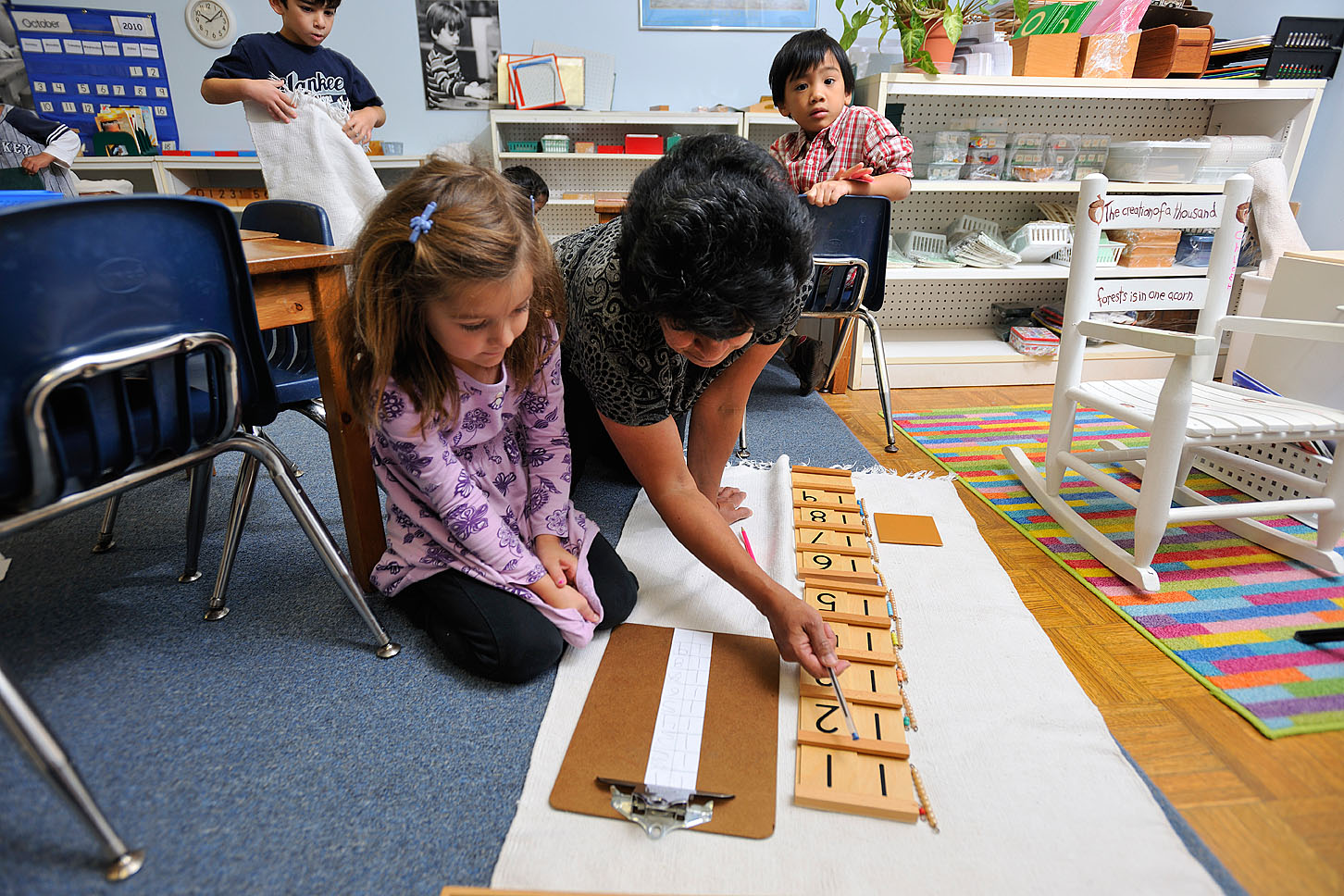
A typical day for Primary students begins with an uninterrupted work cycle in which children choose from among a number of age-appropriate tasks that introduce concepts in math, language, science, or history. Children receive group, as well as individual lessons, through the support and guidance of Montessori certified teachers. At the end of the morning children either go home or remain for lunch and/or the afternoon Montessori session. The lunch program incorporates setting tables, grace and courtesy, table conversation, and clean-up. The afternoon session continues similar to the morning. Both morning and afternoon sessions go out on the playground daily (weather permitting), and both have snack.